

GFRP Rebar Mesh Pultrusion Machine for Sale Factory Price
Our GFRP Rebar Mesh Pultrusion Machine is a high-speed, PLC-controlled line for GFRP rebar mesh from 6mm to 32mm. Our factory supplies automatic fiberglass rebar mesh equipment at factory price.| Parameter | Specification |
|---|---|
| Production Width | 2200mm |
| Grid Spacing (Radial / Latitudinal) | 50–200mm / 30–300mm |
| Rebar Diameter | 4–7mm |
| Production Speed | 450mm/min (50×50mm mesh) |
| Cutting Precision | ±25mm |
| Total Power | 55kW |
| Control System | PLC automatic |
| Machine Weight | 5T |
Contact Our Team
Get professional support for pultrusion equipment, dies, and profilesDescription of GFRP Rebar Mesh Pultrusion Production Line
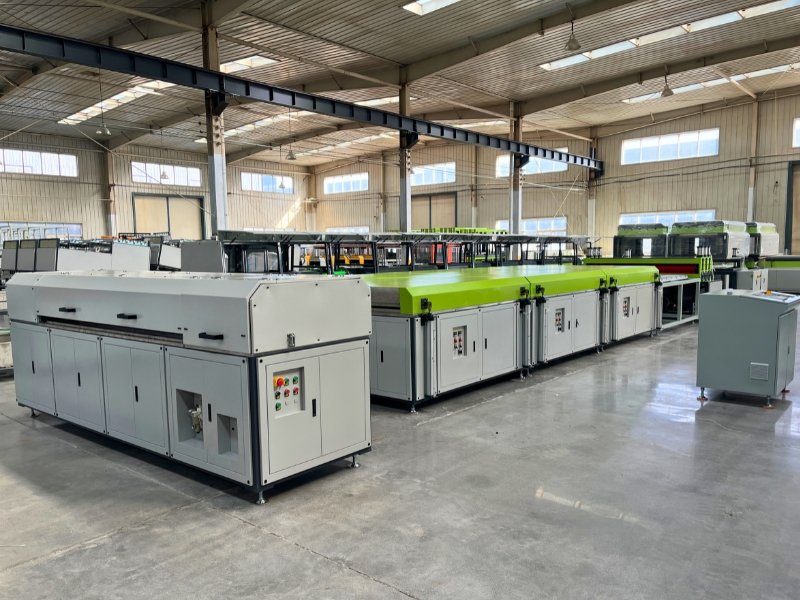
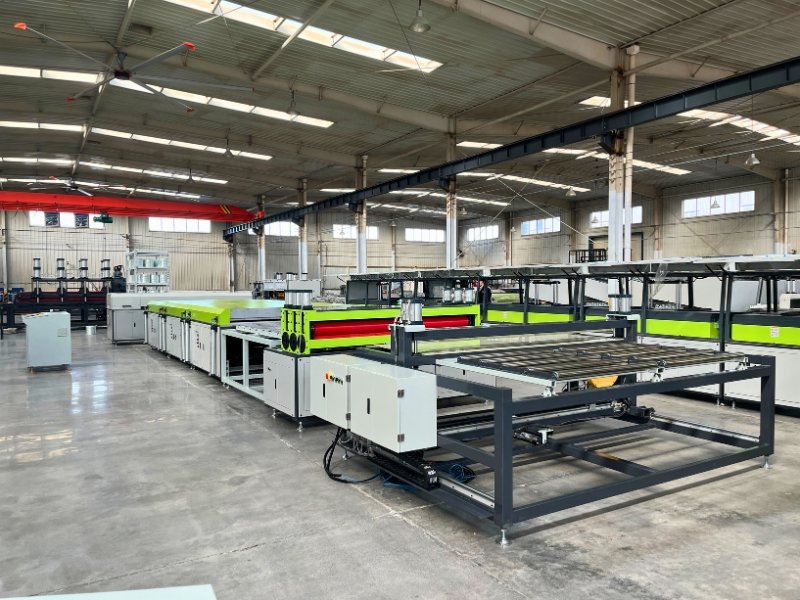
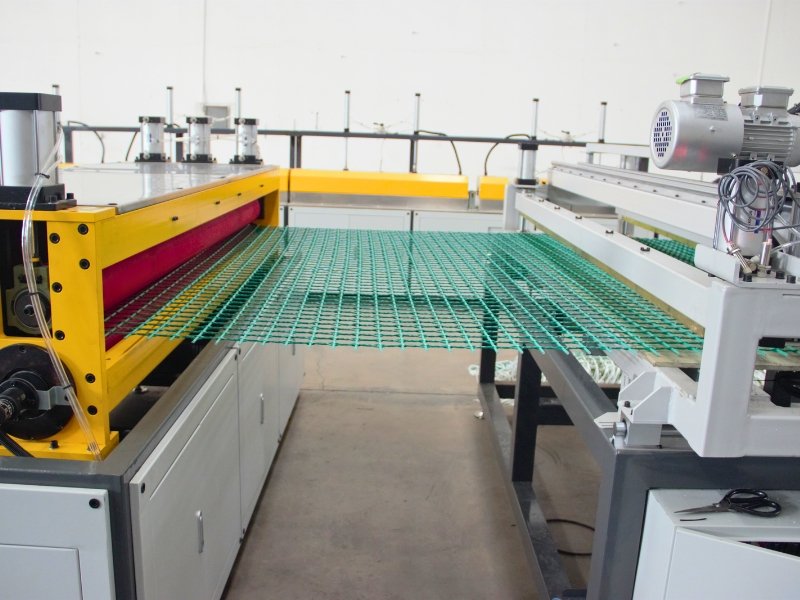
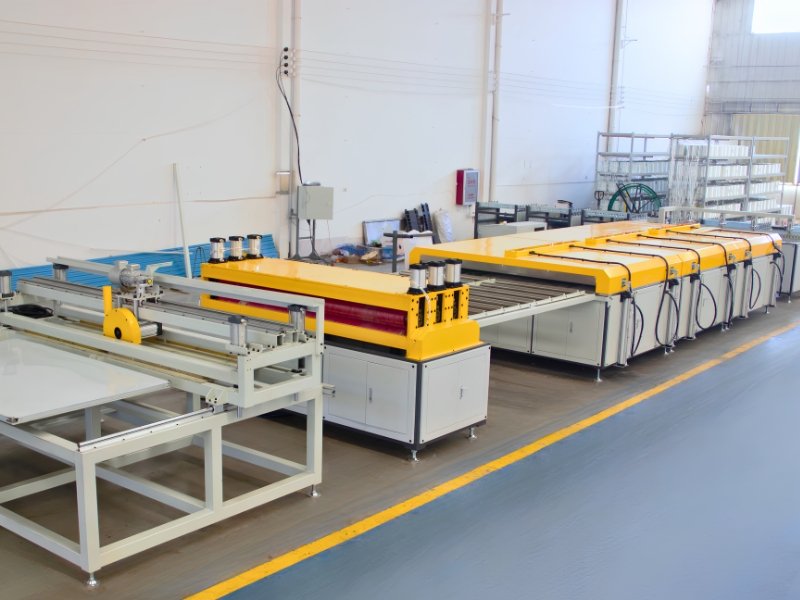
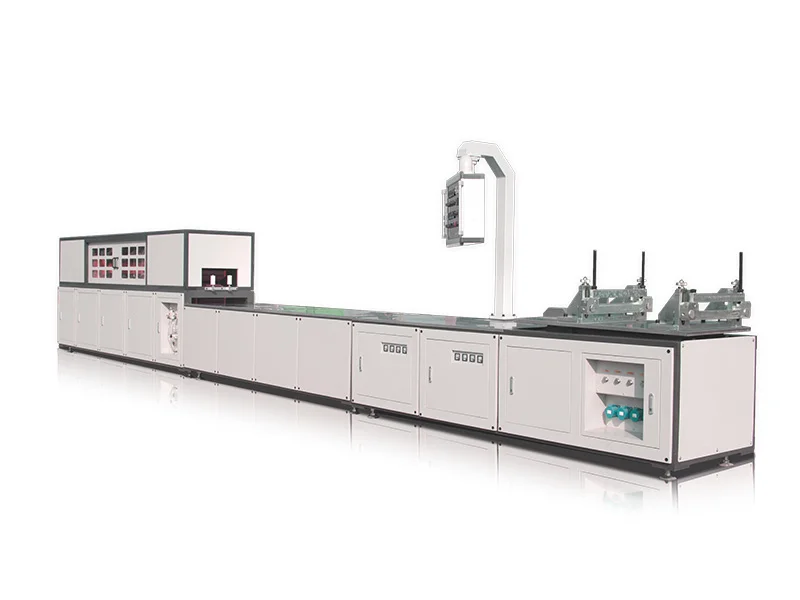
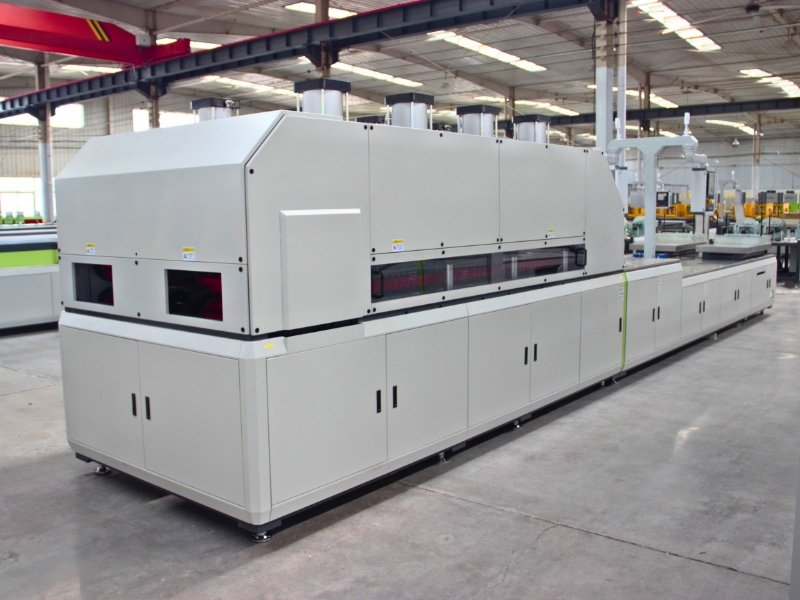
We supply the GFRP Rebar Mesh Pultrusion Machine, a fully automatic continuous pultrusion production line that integrates creel, resin impregnation, mesh weaving, curing oven, haul-off and cutting into one unit. Using glass fiber as raw material, it forms corrosion-resistant GFRP rebar mesh in a single pass, with the whole process controlled by PLC for stable, continuous output and minimal manual intervention.Mesh produced by this fiberglass rebar mesh machine is widely used in concrete reinforcement, bridge deck paving, tunnel lining, marine engineering, slope protection and industrial flooring. Compared with steel, GFRP rebar mesh does not rust, conduct electricity or carry magnetism, and weighs only a quarter of steel, solving the shortened service life caused by rebar corrosion in coastal, chemical and humid environments while lowering maintenance costs and extending structural life.
Key standard specifications include a production speed of 450mm/min at 50×50mm spacing, cutting precision of ±2mm, total power of 55kW, heating power of 36kW and a whole machine weight of 5T. As a China manufacturer, we mainly serve FRP product factories, concrete reinforcement material producers and construction material traders, supplying complete pultrusion production line solutions and factory price quotes.
Demonstration Video of the GFRP Rebar Mesh Pultrusion Production Line
FRP Rebar Mesh Pultrusion Machine: Key Advantages for Global Buyers
Our FRP Rebar Mesh Pultrusion Machine is a fully automatic, PLC-controlled production line engineered for continuous manufacturing of corrosion-resistant GFRP rebar mesh. Built for export markets and heavy-duty operation, it combines high output, stable quality and low running cost — the three factors international buyers care about most.
One Machine, Complete Process
Stable Quality, Repeatable Results
Advantages Your End-Customers Will Pay For
Factory-Direct Value
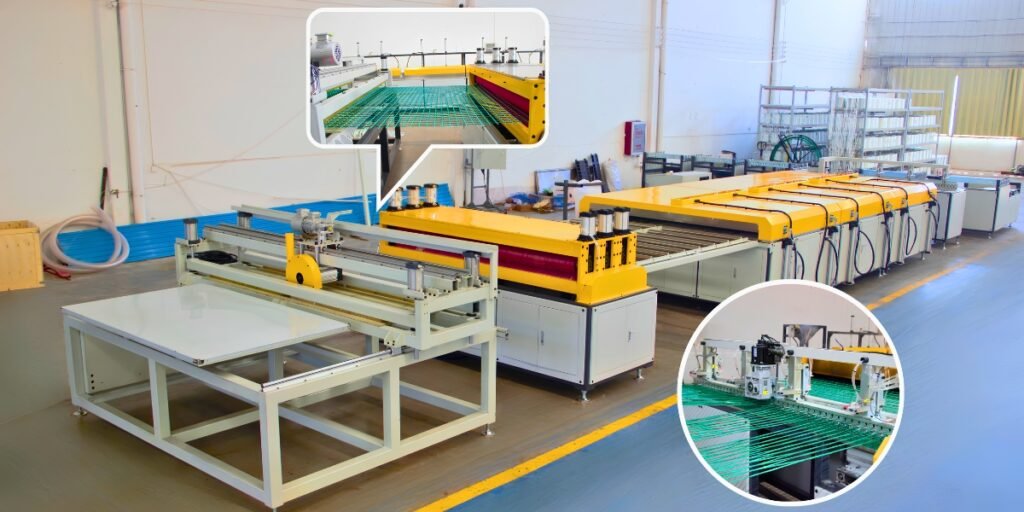
Technical Parameters Of GFRP Rebar Mesh Pultrusion Machine
| Parameter | Specification |
|---|---|
| Production width range | Standard maximum width 2200mm (customizable upon request) |
| Adjustable grid spacing(radial) | 50mm、100mm、150mm、200mm(customizable upon request) |
| Adjustable grid spacing(latitudinal)30mm-300mm(customizable upon request) | 30mm-300mm(customizable upon request) |
| Weavable diameter | 4、5、6、7(customizable upon request) |
| Production speed | 450mm/min (spacing 50×50mm) |
| Cutting precision | ±25mm |
| Total power of equipment | 55kw |
| heating power | 36kw |
| Whole machine weight | 5T |
| Standard Configuration | Creel system (3 sets), adhesive application section, mesh weaving section, oven section (1 set of 3 units), pulling/conveying section, and cutting section |
Production Process of GFRP rebar mesh pultrusion production line
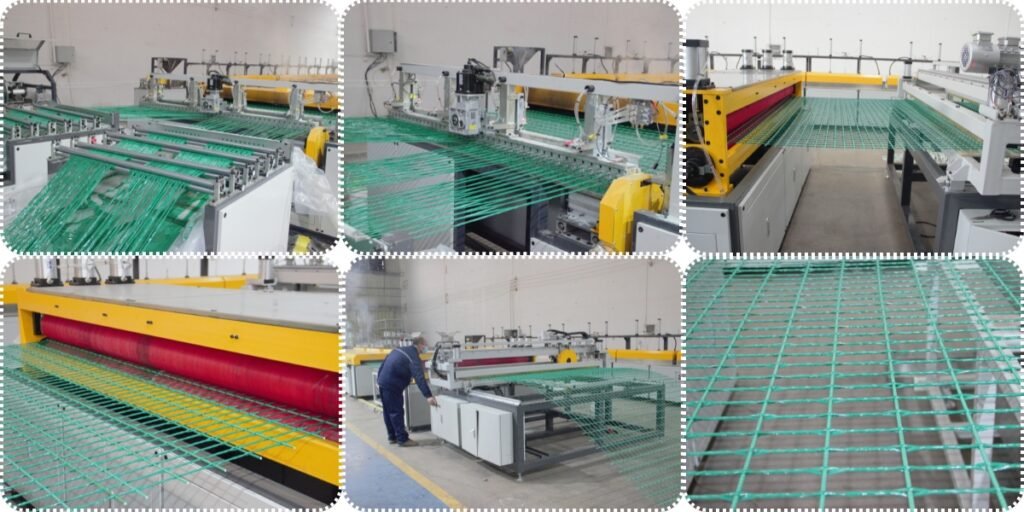
Our GFRP rebar mesh pultrusion production line turns raw glass fiber into finished fiberglass rebar mesh in one continuous, automatic flow. The whole pultrusion process is guided by a PLC system, so the mesh comes out with stable spacing, diameter and strength from the first meter to the last.
Step 1 · Fiber Feeding
Glass fiber rovings are pulled from the creel and grouped into the required number of strands. Tension control keeps every strand even, which sets the base for a uniform mesh.
Step 2 · Resin Impregnation
The fibers pass through a resin bath and are fully soaked. Even impregnation is what makes the final GFRP rebar mesh strong and corrosion-resistant.
Step 3 · Mesh Weaving / Grid Forming
The soaked strands are arranged in two directions — radial (lengthwise) and latitudinal (crosswise) — and woven into a grid. Spacing here decides the opening size of the finished fiberglass mesh.
Step 4 · Heating and Curing
The wet mesh enters the heated oven. Controlled temperature cures the resin and locks the grid into a rigid, solid structure.
Step 5 · Haul-Off (Pulling)
A pulling unit draws the cured mesh forward at a steady speed, keeping production continuous and output stable.
Step 6 · Cutting
The mesh is cut to the required length with an accuracy of ±25mm, ready for packing and shipment.
FAQ — FRP Rebar Mesh Pultrusion Machine
Leave A Message




related news
Contact Our Team
Get professional support for pultrusion equipment, dies, and profiles
Our engineers support resin formulation, equipment commissioning, production startup, and process optimization to ensure efficient FRP profile manufacturing.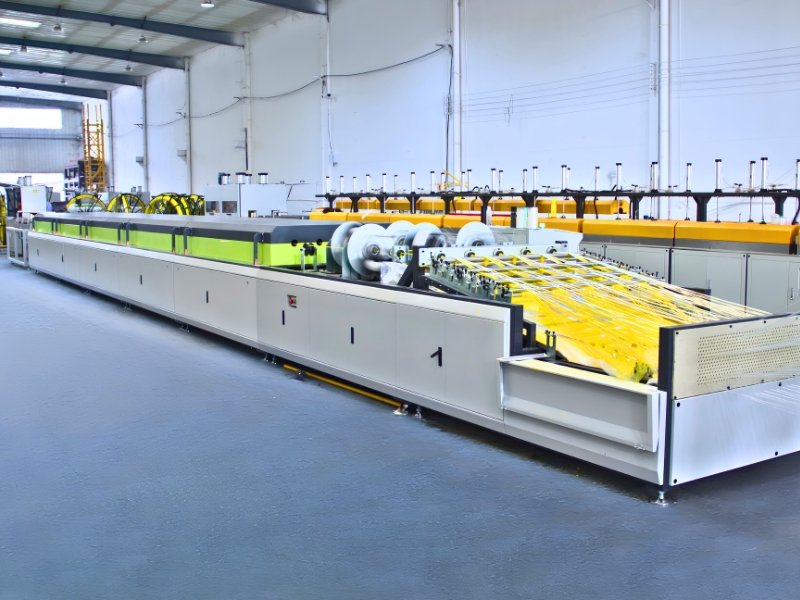
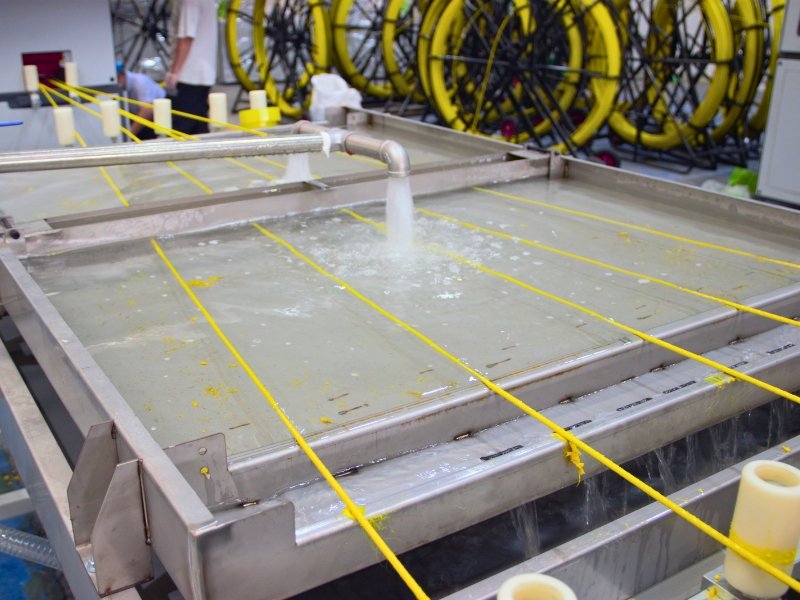
GFRP Rebar Mesh Pultrusion Machine for Sale Factory Price
5-Line FRP Rebar Pultrusion Machine — a high-output GFRP fiberglass rebar production line with stable, energy-saving automatic operation. Factory-direct support from a leading manufacturer.| Parameter | Specification |
| Number of Output Lines | 5 lines (simultaneous, multi-strand die) |
| Rebar Diameter Range | 4 – 32 mm |
| Pulling Speed | 0.5 – 4 m/min (stepless adjustable) |
| Curing Oven | 5 independent zones, 0 – 250 °C |
| Cutting Accuracy | ± 5 mm |
| Installed Power | 50 kW |
| Power Supply | 380 V, 3-phase, 50 Hz |
| Overall Line Dimensions (L×W×H) | Approx. 35 m × 3 m × 1.8 m |
Contact Our Team
Get professional support for pultrusion equipment, dies, and profilesDescription of 5-Line Fiberglass Rebar Production Line
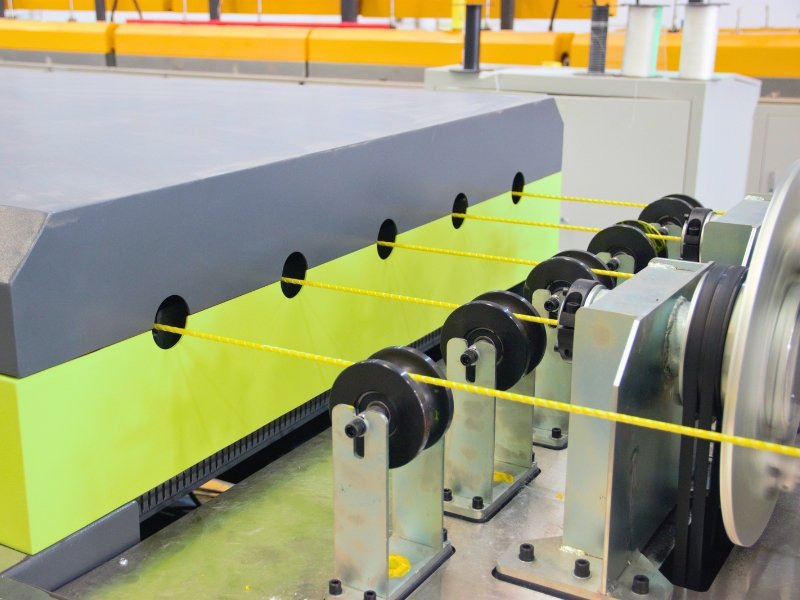
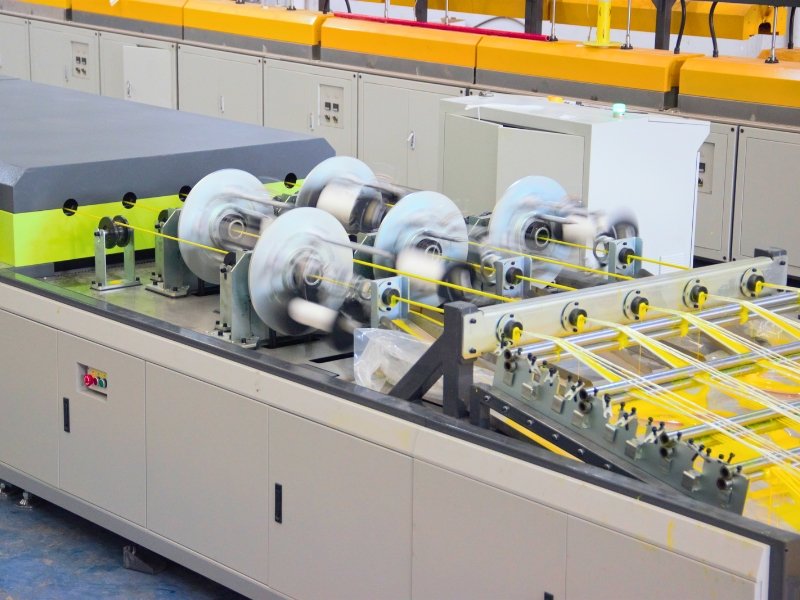
TOLIKE supplies the 5-Line FRP Rebar Pultrusion Machine, a high-output GFRP fiberglass rebar production line built for continuous, multi-strand manufacturing. Equipped with a five-cavity die and a five-zone curing oven, it simultaneously pulls five rebars, covering diameters from 4 to 32 mm at a pulling speed of 0.5–4 m/min.Stable, energy-saving and fully automatic, this FRP rebar machine ensures uniform resin impregnation, consistent curing and ±5 mm cutting accuracy — solving the low output and high material waste typical of single-line pultrusion. It produces corrosion-resistant composite rebar and fiberglass rods for bridges, tunnels, coastal and chemical engineering projects.
For manufacturers, distributors and contractors, TOLIKE’s 5-line design lowers unit cost, saves floor space and multiplies daily capacity, backed by factory-direct pricing, customizable voltage and full technical support.
Demonstration Video of the 5-Line Fiberglass Rebar Production Line
Why Buyers Choose TOLIKE’s Multi-Line GFRP Rebar Pultrusion Machine
Higher Output in the Same Floor Space
Running five strands in a single pass, the FRP rebar pultrusion machine lifts daily output far beyond a single-line unit — without hiring more operators. For a buyer, that means more meters per shift and a lower cost per meter, so the machine pays for itself faster.
Lower Energy Bills
One drive system and one curing oven serve five strands instead of running five separate lines. In markets with high power tariffs, this alone can cut electricity cost per ton noticeably.One drive system and one curing oven serve five strands instead of running five separate lines. In markets with high power tariffs, this alone can cut electricity cost per ton noticeably.
Less Dependence on Skilled Labor
Automatic temperature control, stepless speed adjustment and automatic cutting mean a small crew can run the whole line. Buyers facing rising wages or labor shortages get stable output with fewer trained staff.
Consistent Quality, Less Scrap
Five-zone curing and uniform resin impregnation keep diameter and strength within tight tolerances (±5 mm cutting accuracy). Fewer rejects mean less wasted resin and fiberglass, and fewer quality complaints from end users.
Compact, Container-Friendly Design
The line fits typical workshop layouts (approx. 35 m × 3 m), so clients don’t need to expand their building before installation — a real point for buyers with existing factory space.
Built to Keep Running
Wear parts are standardized and easy to replace locally, and TOLIKE keeps fast-moving spare parts in stock. Every avoided day of downtime is money saved for the buyer.
Customized to Your Grid and Market
Voltage, plug type and even rebar diameter range can be configured to match the destination country — a frequent requirement for clients in the Middle East, Southeast Asia and Africa.
Factory-Direct Pricing and Support
Buyers deal directly with the manufacturer: competitive pricing, faster quotations, flexible order quantities and direct technical answers instead of going through a trading middleman.
Full Support from Order to Production
From installation and commissioning to operator training, the 5-line system comes with on-site or remote guidance, so clients can start producing in the shortest time.
Proven End-Use Value
Output from this production line goes into bridge decks, tunnels, coastal and chemical projects — markets where corrosion resistance beats steel. Buyers are investing in a product line with growing global demand, not just a machine.
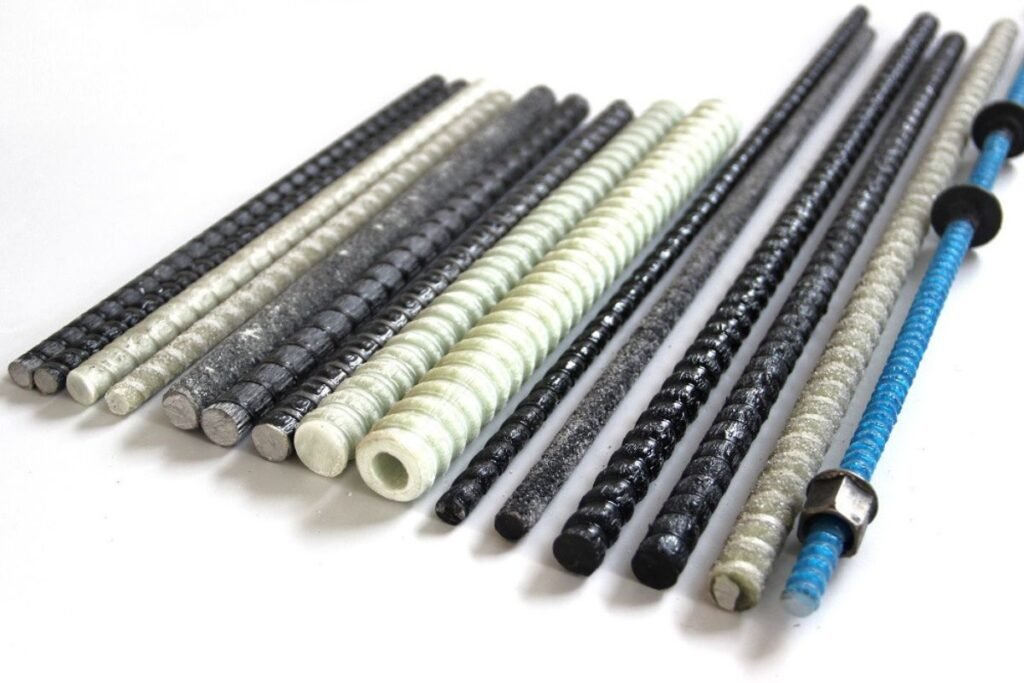
Technical Parameters Of A 5-Line Fiberglass Rebar Pultrusion Equipment
| Model | GFRP Rebar Pultrusion Machine | |||
| Lines Quantity | 5 lines | |||
| Diameter Range | 4-32mm | |||
| Roving Rack | Quantity Configured | 2/300 Roll | ||
| Overall Dimensions | Length: 6000 | Width: 1000 | Height: 2430 | |
| Yarn preheating unit | Number of Units | 2 | ||
| Overall Dimensions | Length: 1500 | Width: 1000 | Height: 1375 | |
| Preheating Power | 3kwX2 | |||
| Temperature Range | 0-80℃ | |||
| Resin Tank | Overall Dimensions | Length: 2230 | Width: 1700 | Height: 1900 |
| Resin Tank Capacity | 40L | |||
| Winding Device | Overall Dimensions | Length: 2250 | Width: 1700 | Height: 1900 |
| Winding Speed | 0-400r/min | |||
| Winding Power | 1.1kwX5 | |||
| Heating Device | Number of Units | 5 | ||
| Overall Dimensions | Length: 2250 | Width: 1700 | Height: 1900 | |
| Heating Power | 9kwX5 | |||
| Temperature Range | 0-250℃ | |||
| Cooling Device | Cooling System Type | Water Cooling | ||
| Power | 200w | |||
| Overall Dimensions | Length: 2250 | Width: 1600 | Height: 1300 | |
| Traction Unit | Overall Dimensions | Length: 2250 | Width: 1000 | Height: 2050 |
| Traction Speed | 0-4000mm/min | |||
| Traction Power | 1.5kwX2 | |||
| Cutting Saw | Overall Dimensions | Length: 2250 | Width: 1000 | Height: 1550 |
| Overall Dimensions of Material Support Stand | Length: 2250 | Width: 1000 | Height: 1550 | |
| Cutting Range | 400X60 | |||
| Cutting Power | 3kW | |||
| Transportation Speed | 20m/min | |||
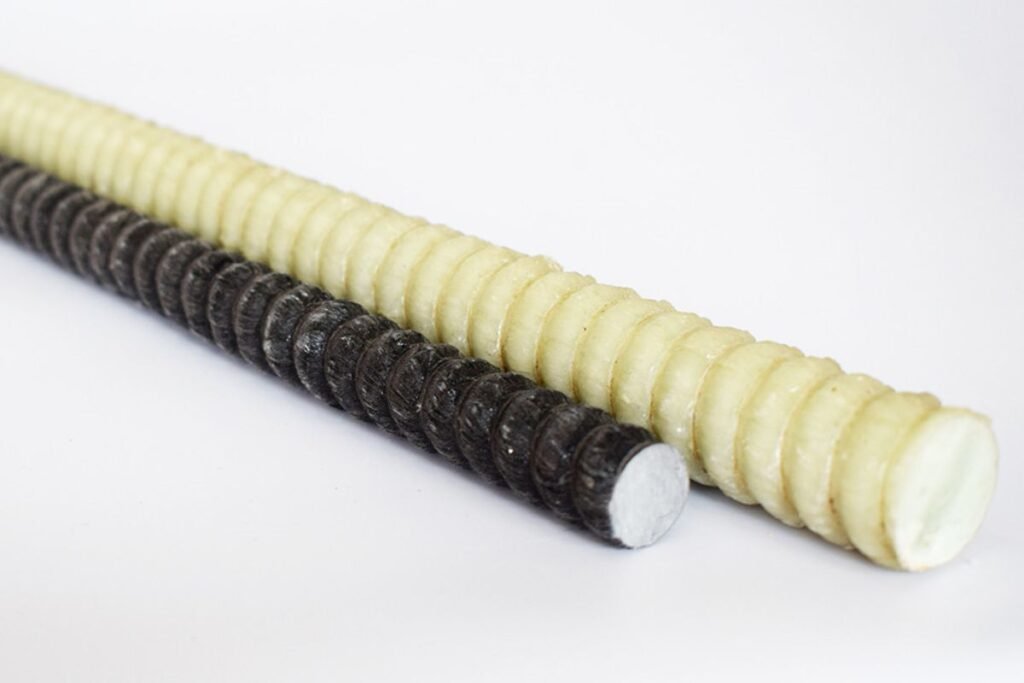
Production Process of 5-Line FRP Rebar Production Line
The 5-Line FRP Rebar Production Line is a continuous pultrusion system that turns fiberglass rovings and resin into five parallel strands of GFRP rebar in a single pass. From yarn feeding to final cutting, the process runs automatically and in line, allowing one operator crew to produce five rebars of 4–32 mm diameter at the same time. Below is how each stage works — and what it means for your output and product quality.
Step 1 · Yarn Feeding
Fiberglass rovings are mounted on the creel (yarn rack) — for this model, a 2/300 roll rack — and drawn off under controlled tension. Even tension at this stage decides whether the five strands stay uniform in diameter later on.
What it means for you: a proper rack layout prevents yarn tangling and cuts breakage downtime.
Step 2 · Yarn Preheating
The rovings pass through a preheating unit (2 × 3 kW) to remove moisture and bring the fiber to the right temperature. Dry, warm fiber absorbs resin far more evenly.
What it means for you: fewer bubbles and voids inside the rebar, and more consistent mechanical strength.
Step 3 · Resin Impregnation
The heated rovings enter the resin tank (40 L, 0–80 °C temperature control), where they are fully wetted with resin. This is the core of composite quality — incomplete impregnation is the most common cause of weak rebar.
What it means for you: uniform resin pick-up means stable weight-per-meter and fewer rejects.
Step 4 · Winding & Shaping
In the winding device (0–400 m/min, 1.1 kW × 5), surface yarn or continuous filament is wound around the strand to form the ribbed profile, giving the rebar its bond with concrete.
What it means for you: a well-wound rib profile passes the pull-out and bond tests demanded by construction specifiers.
Step 5 · Heating & Curing
The strands enter a multi-zone curing oven (5 zones, 0–250 °C, 9 kW × 5). Controlled heat triggers the resin to cure, locking in shape and strength. Temperature stability across all five strands is what keeps them identical to each other.
What it means for you: consistent curing means every strand meets the same strength grade — critical when buyers test samples.
Step 6 · Cooling
After curing, the rebar passes through a water cooling system (200 W) to bring it down to handling temperature, so it holds its straightness and does not deform after leaving the oven.
What it means for you: straight, warp-free rebar that stores and transports well.
Step 7 · Traction
The traction unit (0–4000 mm/min, 1.5 kW × 2) pulls all five strands through the line at an adjustable, stepless speed. This stage sets your actual production rate — the faster the pull, the higher the output, provided curing keeps up.
What it means for you: speed can be tuned to balance output against cure quality, instead of running flat out and risking under-cured product.
Step 8 · Cutting
Finally, the cutting saw (400 × 60 blade, 3 kW) cuts the finished rebar to the length your market needs, at a controlled cutting speed of about 20 m/min.
What it means for you: consistent cut lengths (±5 mm) reduce waste and match customer order specs.
Step 9 · Collection & Packaging
Finished rebar is collected, bundled and packed for shipping. Standard bundles are easier to handle, and customized bundling can match your local market’s handling habits.
