
Anti-Corrosion FRP Pultruded Sheet Pile Manufacturer
Corrosion-resistant FRP sheet piles deliver lightweight, high-strength pultruded fiberglass piling for seawalls, retaining walls, and flood protection. Manufacturer direct wholesale, custom sizes, OEM/ODM service.| Parameter | Specification |
|---|---|
| Moment of Inertia (Ix) | 1620 cm⁴/m |
| Section Modulus (Wx) | 276.3 cm³/m |
| Tensile Strength | 280 MPa |
| Flexural Strength | 230 MPa |
| Barcol Hardness | 45 |
| Izod Impact | 0.9 J/mm |
| Thermal Expansion | 28 μm/m·°C |
| Water Absorption | 0.16% / 24h @ 25°C |
Contact Our Team
Get professional support for pultrusion equipment, dies, and profilesGRP Sheet Piles – Product Description
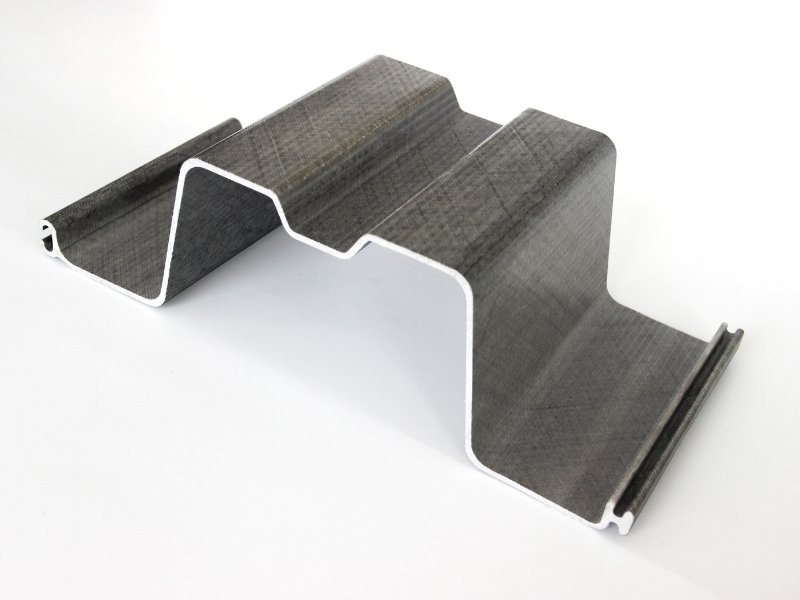
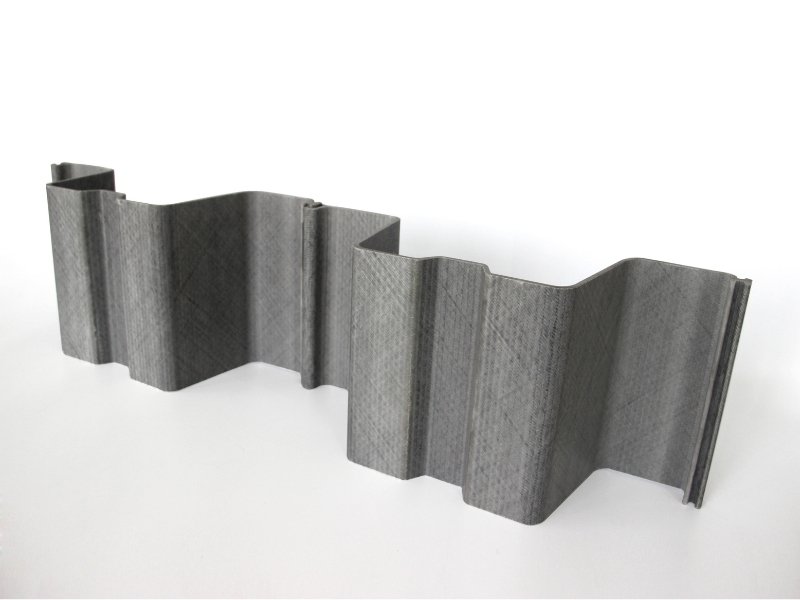
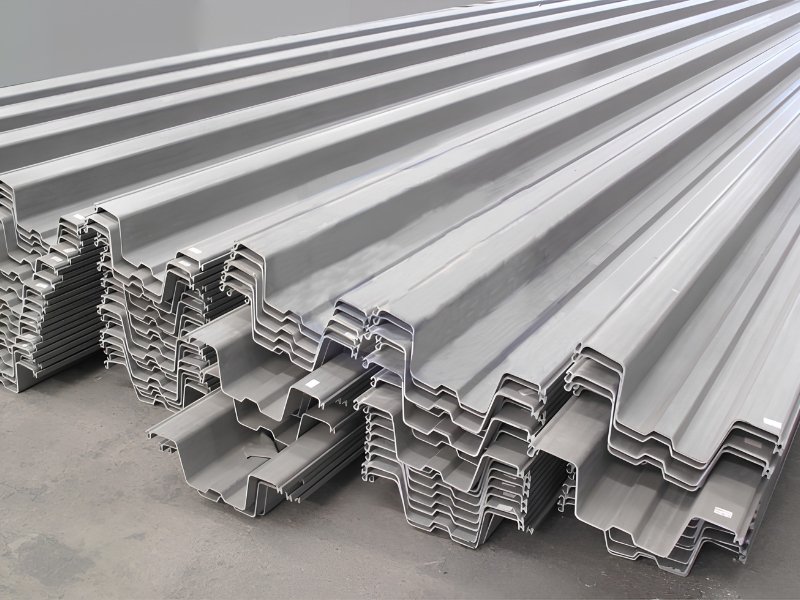
TOLIKE supplies corrosion-resistant GRP sheet piles engineered for demanding marine and civil projects. Pultruded from high-strength fiberglass, these composite sheet piles deliver lightweight, high-stiffness performance with excellent tensile and flexural strength, minimal water absorption, and non-conductive safety. They serve as durable alternatives to steel, timber, and concrete in seawalls, retaining walls, cofferdams, and flood protection, resisting corrosion, UV, and chemical attack for a long service life. Ideal for contractors, engineers, and distributors, TOLIKE provides custom FRP sheet piling solutions with reliable factory supply, competitive pricing, and export support worldwide.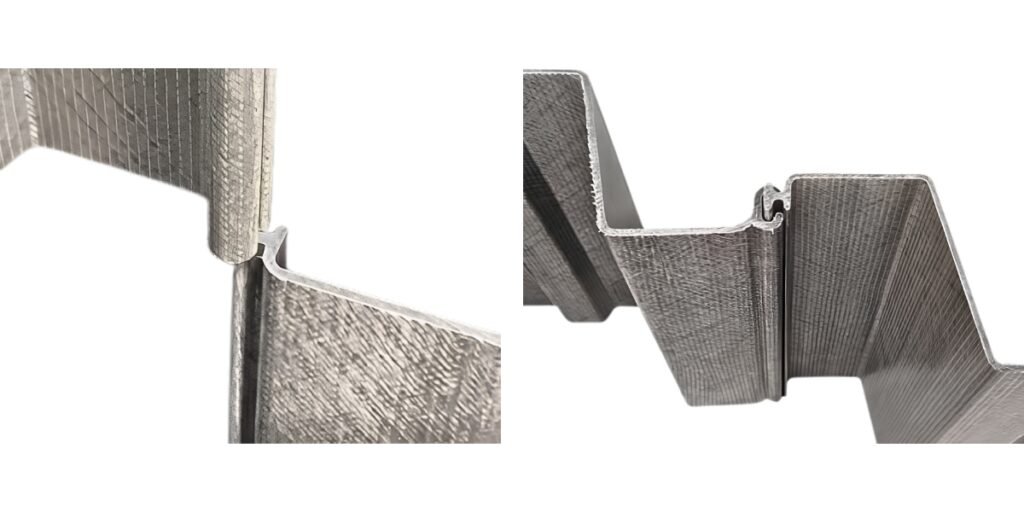
Advantages of Fiberglass Sheet Piling
Fiberglass sheet piling is increasingly specified for waterfront, industrial, and civil works where long-term structural integrity matters most. Built from pultruded glass-fiber reinforced polymer, it outperforms traditional materials in the most aggressive service environments.
Exceptional Corrosion Resistance
Unlike steel, fiberglass sheet piling never rusts and needs no protective coating or cathodic protection. It withstands saltwater, brackish conditions, and a wide range of acids and chemicals, making it ideal for marine and industrial installations.
Outstanding Strength-to-Weight Ratio
Its high strength combined with low density allows lighter sections to carry heavy loads. This reduces transport cost, simplifies handling, and often removes the need for heavy lifting equipment on site.
Very Long Service Life with Minimal Maintenance
Fiberglass piling is engineered to resist degradation over decades of exposure, keeping maintenance budgets low and whole-life cost down compared with steel or timber systems.
Non-Conductive and Non-Magnetic
Being electrically insulating and magnetically inert, fiberglass sheet piling suits electrified rail corridors, substations, and sensitive facilities where metal piling would create safety or interference risks.
UV and Weather Resistance
Formulated with UV stabilizers, it holds its mechanical properties under continuous sunlight, freeze-thaw cycling, and harsh weather without becoming brittle or discoloring.
Design Flexibility and Easy Fabrication
Fiberglass sheet piling can be cut, drilled, and assembled with standard tools, and is available in customized lengths and profiles to match specific project geometry.
Environmentally Responsible Choice
Its durability and low maintenance translate into fewer material replacements and a smaller long-term footprint — a strong point for projects targeting sustainability goals.
Physical Properties of FRP Sheet Piles
| Parameter | Specification |
|---|---|
| (I)Momentof Inertia | Ix1620cm4/m |
| Section Modulus | Wx=276.3cm3/m |
| Tensile Strength | 280Mpa |
| Flexural Strength | 230Mpa |
| Barcol Hardness | 45 |
| Izod Impact | 0.9j/mm |
| Thermal Expansion | 28um/m.°c |
| water Absorption | 0.16%/24hrs@25℃ |
Applications of FRP Sheet Piles
FRP sheet piles are specified wherever long-term durability and resistance to water, salt, and chemicals outweigh the limits of conventional materials. Their pultruded construction makes them equally suitable for permanent structures and temporary works, from coastal defences to industrial containment.
Waterfront & Coastal Protection
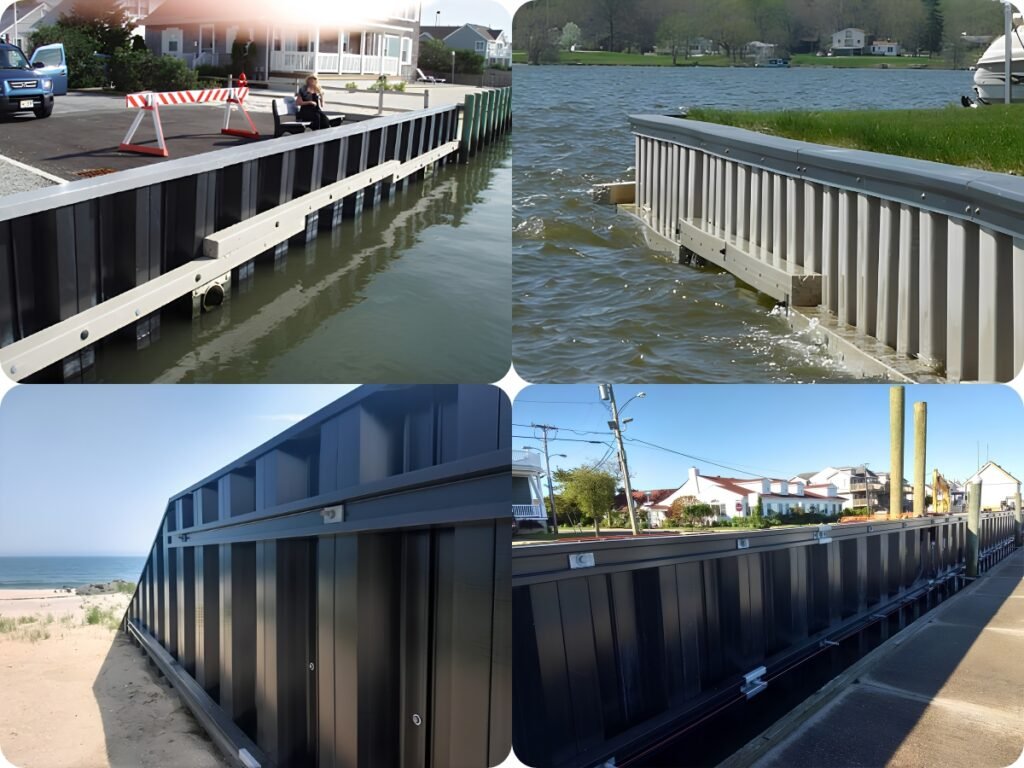
Marine bulkheads, seawalls, and revetments rely on fiberglass piling to hold back soil and water while resisting salt spray and tidal cycles. Unlike steel, they need no coating or cathodic protection, cutting whole-life maintenance along exposed shorelines.
Retaining & Earth Retention
For retaining walls, bridge abutments, and slope stabilization, composite sheet piling carries lateral earth pressure in space-restricted sites where cast-in-place concrete is impractical. Lightweight sections can be installed with lighter equipment, reducing access and transport constraints.
Flood Defence & Water Control
Flood walls, levees, and riverbank reinforcement use these sections to form continuous barriers against rising water. Their watertight interlocking profiles suit seepage control and groundwater cut-off, protecting land and infrastructure during peak flow events.
Cofferdams & Temporary Works
In bridge foundations, pump stations, and pipeline crossings, fiberglass sheet piling serves as a reusable cofferdam material — corrosion-free in wet ground and easy to extract, which lowers project cost across repeated use.
Industrial & Environmental Containment
Chemical plants, wastewater facilities, and pond or channel linings benefit from the material’s resistance to acids, alkalis, and aggressive effluents, where steel would corrode and contaminate. Non-conductive and non-magnetic behaviour also makes it a natural fit near electrified rail, substations, and sensitive instrumentation — an application few traditional materials can serve.
Ports, Marinas & Aquaculture
Docks, jetties, and fish-farm enclosures use composite sheet piles for their tolerance of permanent immersion and marine organisms, delivering decades of service with negligible upkeep.