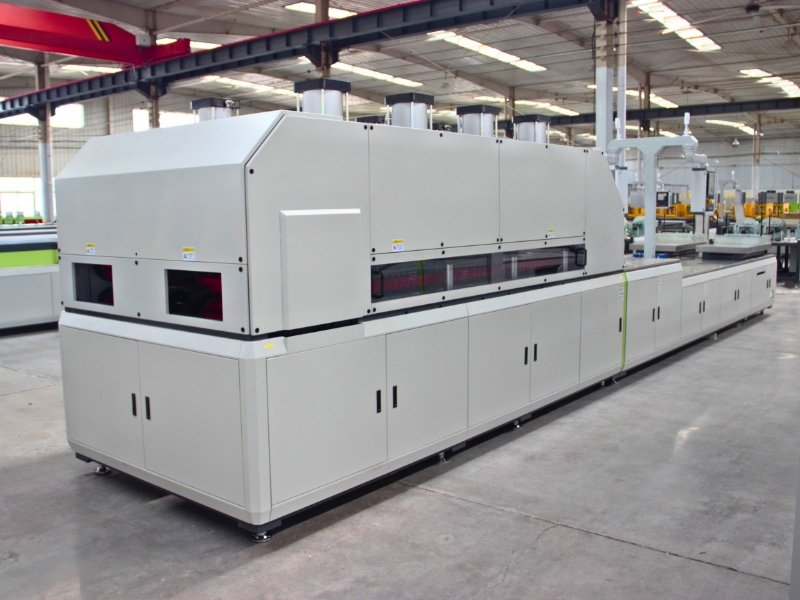
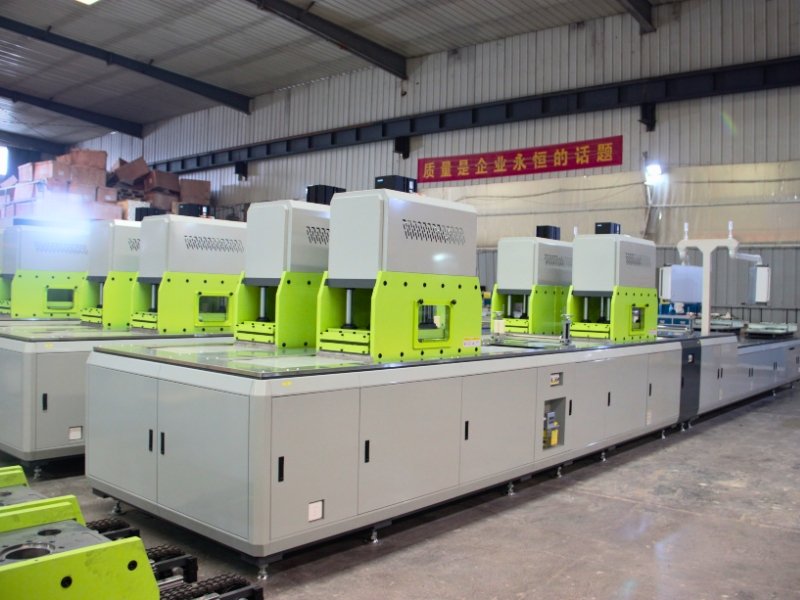
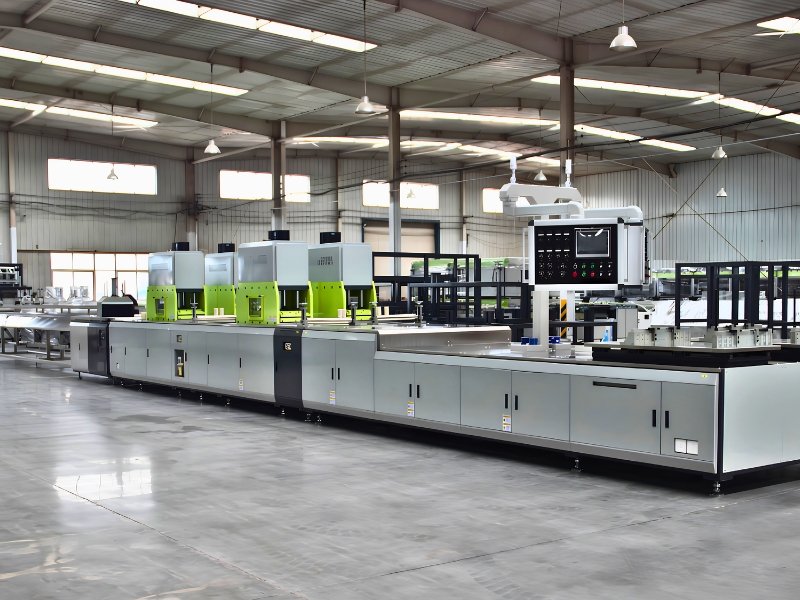
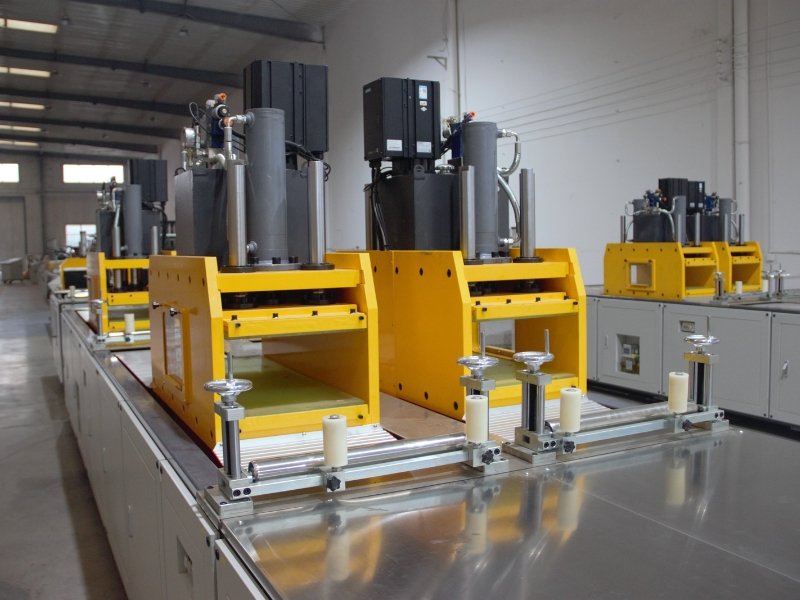
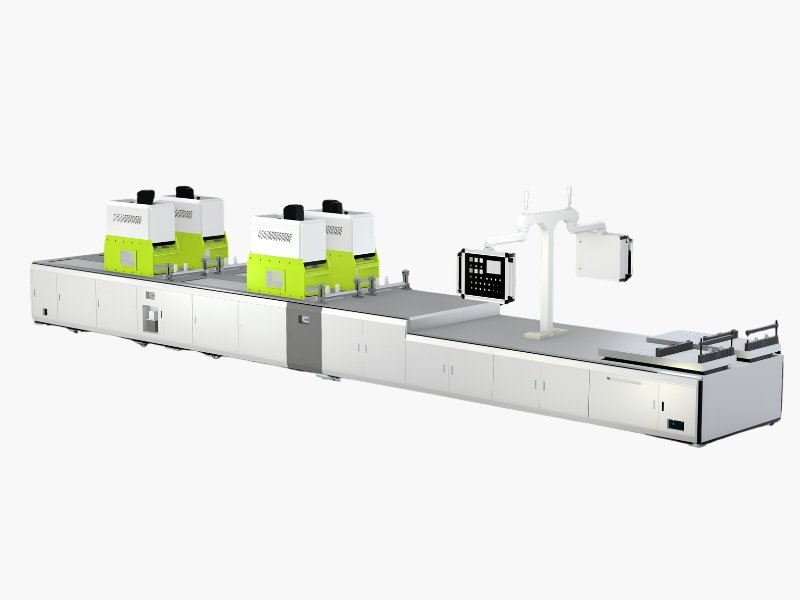
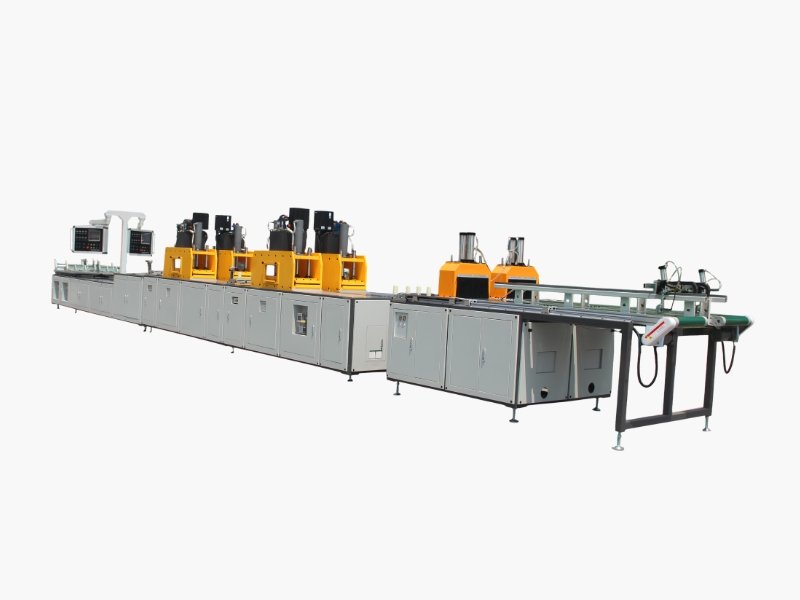
FRP Double Station Hydraulic Pultrusion Machine
This FRP double station hydraulic pultrusion machine from a leading China manufacturer runs two independent PLC-controlled lines on one frame, for stable, high-efficiency fiberglass profile output.| Parameter | Specification |
| Pulling Force | 10–50 Ton (customizable) |
| Working Stations | 2 independent hydraulic stations |
| Pulling Speed | 0.1–1.5 m/min (stepless) |
| Temperature Control | 8 zones, 0–250 °C (±1 °C) |
| Control System | PLC, auto reciprocating |
| Total Power / Size | 76 kW / 11000 × 1700 × 2200 mm |
Contact Our Team
Get professional support for pultrusion equipment, dies, and profilesIntroduction to Dual-Station Hydraulic Pultrusion Production Line
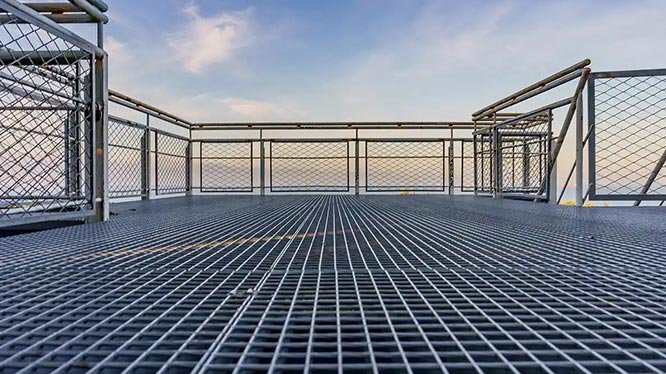
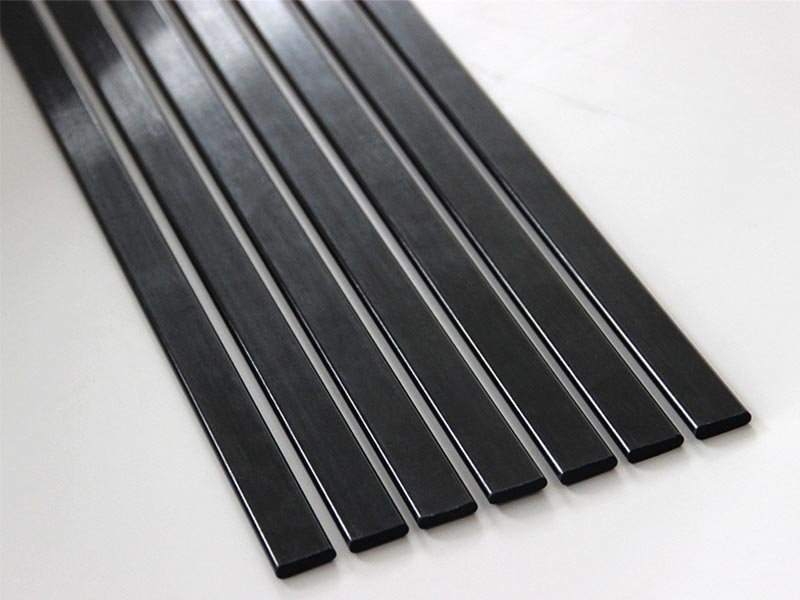
TOLIKE’s Dual-Station Hydraulic Pultrusion Production Line links two PLC-synchronized hydraulic traction stations into one turnkey flow — fiber creel, resin bath, heated die, reciprocating puller and flying saw — so two FRP profiles are pultruded simultaneously.For cable tray, grating, ladder and structural profile makers, one line does the work of two — higher daily output, a single operator for both streams, and lower labor cost per finished profile.
As a China pultrusion machine manufacturer, TOLIKE supplies these lines with servo-hydraulic traction, multi-zone die heating and custom molds, plus on-site commissioning, spare parts and worldwide operator training.
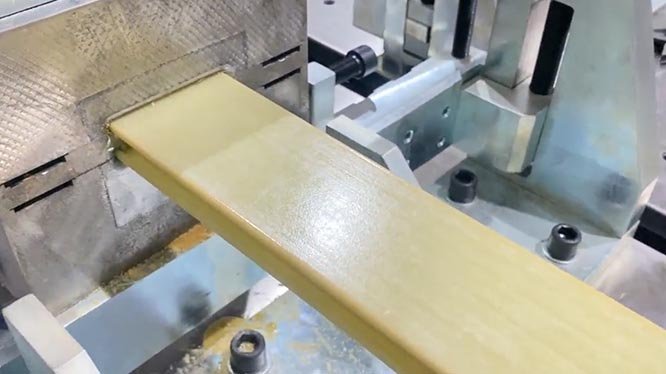
Demonstration Video of the 50-Ton Double Station Hydraulic Pultrusion Machine:
Advantages of Double-Station Hydraulic Pultrusion Equipment for FRP
Dual-Station, One Chassis — Double the Output
Two fully independent hydraulic stations run at separate speeds and die settings, producing two FRP profiles at once in the same footprint.
Servo-Hydraulic Traction, PLC-Synchronized
Closed-loop servo control holds pulling speed at 0.1–1.5 m/min, removing the speed surges that cause internal micro-cracks and uneven fiber distribution.
10–50 Ton Pulling Force for Heavy Sections
Strong, adjustable traction handles large-section, high-density profiles such as cable tray, grating, I-beam and ladder — with non-marking clamping.
Multi-Zone Die Heating for Full Curing
Independent heating zones (up to 250 °C, ±3 °C) cure the resin evenly end to end, keeping dimensional consistency and cutting scrap rate.
One Operator, 24/7 Continuous Running
From fiber creel and resin bath to heated die, reciprocating puller and flying cut-off saw, the line runs as one automated flow with auto lubrication.
Turnkey Supply from a China Manufacturer
TOLIKE delivers complete pultrusion production lines with custom molds, PLC control, on-site commissioning, spare parts and worldwide operator training.
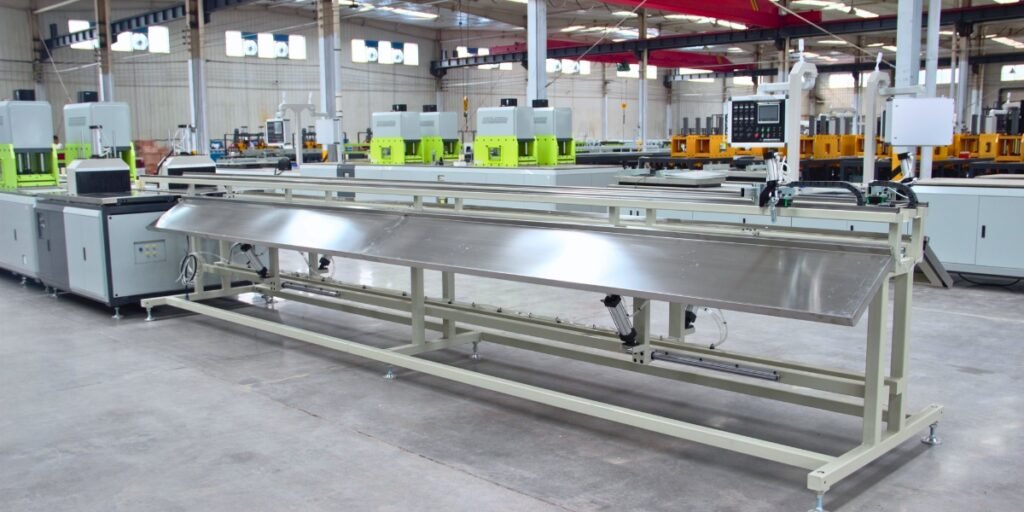
Technical Parameters of Double Station Hydraulic Pultrusion Machine
|
Engineering Parameter |
Factory Standard Specification |
|
Model & Tonnage Range |
10 T – 50 T double station models |
|
Max. Traction Effort (per station) |
100 -500 kN (10–50 Ton), steplessly adjustable |
|
Total Traction Effort (dual station) |
200 – 1000 kN (20–100 Ton), two independent units |
|
Number of Working Stations |
2 independent hydraulic stations, one-out-one / one-out-two |
|
Line Velocity Range |
0.1–1.5 m/min, stepless, PLC + VFD with digital display |
|
Effective Gripping Length |
1000 mm, extended non-slip contact zone |
|
Mold Table Configuration |
W500 × H200 × L430–1030 mm (100 mm adjustment intervals) |
|
Heating Zones & Temperature |
6–10 independent PID zones, 0–250 °C, ±3 °C |
|
Oven Cavity Dimensions (L×W×H) |
1000 × 500 × 470 mm, hot-air circulation, uniform curing |
|
Max. Product Clearance (W×H) |
200 × 100 mm (larger sections on request) |
|
Main Machine Dimensions (L×W×H) |
11000–13000 × 1460 × 2200 mm (excluding creel frame) |
|
Total Installed Power & Control |
45–110 kW, 380 V / 50 Hz / 3-phase, PLC centralized control |
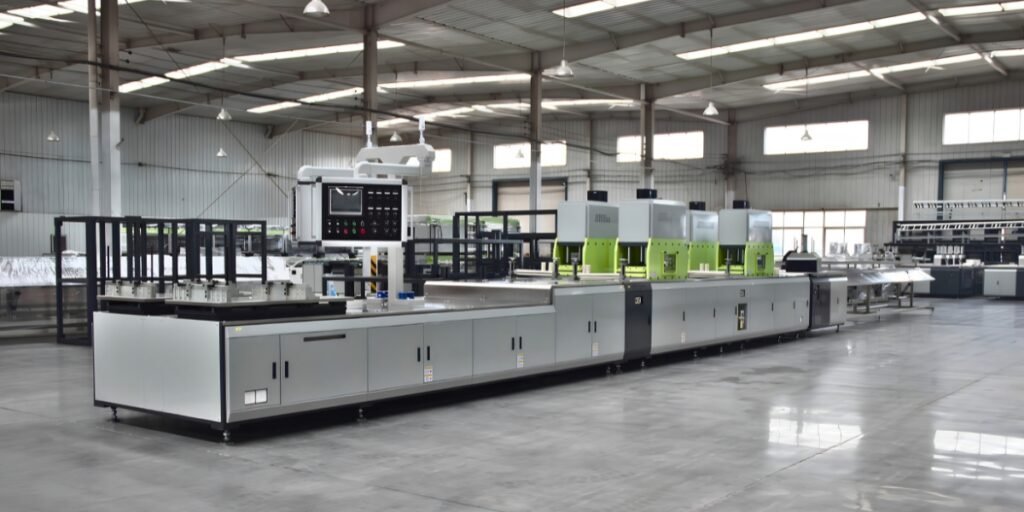
Production Process of FRP Double Station Hydraulic Pultrusion Line
The FRP double station hydraulic pultrusion line turns continuous glass fiber and thermoset resin into rigid, constant-section profiles in one uninterrupted pass. Because two independent stations share a single chassis, the sequence below runs twice at the same time — each station feeding, curing and cutting on its own pull speed, die temperature and profile section.
Fiber Feeding & Creel Loading
Glass fiber rovings are drawn from creels under controlled tension, while surface mat is unwound in parallel. Guide plates align the reinforcement into the cross-section pattern required by the target profile, keeping every bundle parallel before it reaches the resin bath.
Resin Impregnation (Wet-Out)
The aligned fibers pass through a heated resin bath containing polyester, vinyl ester or epoxy, together with filler, pigment and catalyst. Complete wet-out here decides the bonding strength of the finished FRP profile, so bath level and resin viscosity are monitored continuously.
Preforming & Excess Resin Control
A set of preforming guides squeezes out surplus resin and trapped air, then gradually shapes the saturated bundle toward the die inlet. Even resin distribution at this point prevents dry spots and internal voids later in the line.
Heated Die Curing
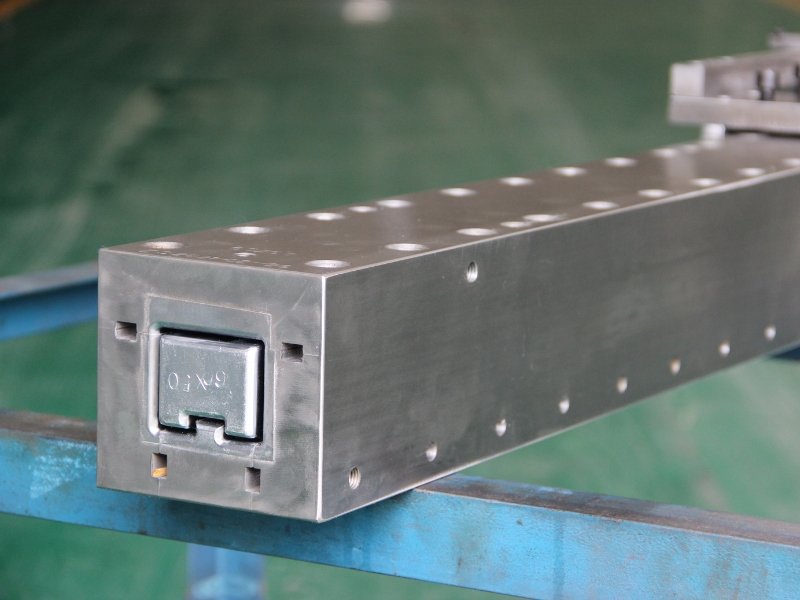
Inside the multi-zone heated steel die, the composite passes through preheating, gelation and curing zones at 80–250 °C. The resin cross-links and hardens into the exact die cavity shape. PID-controlled zones hold temperature within ±3 °C so cure degree stays consistent along the whole profile length.
Dual-Station Hydraulic Pulling
Two hydraulic traction units grip the cured profile with a 1000 mm non-slip contact zone and pull it forward at a stepless 0.1–1.5 m/min. Closed-loop servo control, coordinated by the master PLC, removes speed surges that cause micro-cracks. Each station clamps and releases on its own cycle, so station A and station B never interfere — one line can run a round tube on one side and a flat strip on the other.
Discharge, Inspection & Packaging
Finished profiles are unloaded, checked for dimensional accuracy, surface finish and straightness, then bundled and packed for shipment. Rejected pieces are logged so mould and temperature settings can be fine-tuned.
Synchronized Flying Cut-Off
A flying saw travels with the moving profile and cuts it to preset length without stopping production. Cut length is programmable from the HMI, which keeps output continuous across both stations.

Why the Dual-Station Layout Changes the Workflow
On a conventional single-station machine, the process halts whenever a die is changed or a station is serviced. On this double station hydraulic pultrusion production line, the two stations keep separate die sets, heating profiles and pull speeds, so one can keep running while the other is re-tooled. The result is near-continuous output, roughly double the daily capacity in the same floor space, and one operator managing both streams from a single PLC panel.