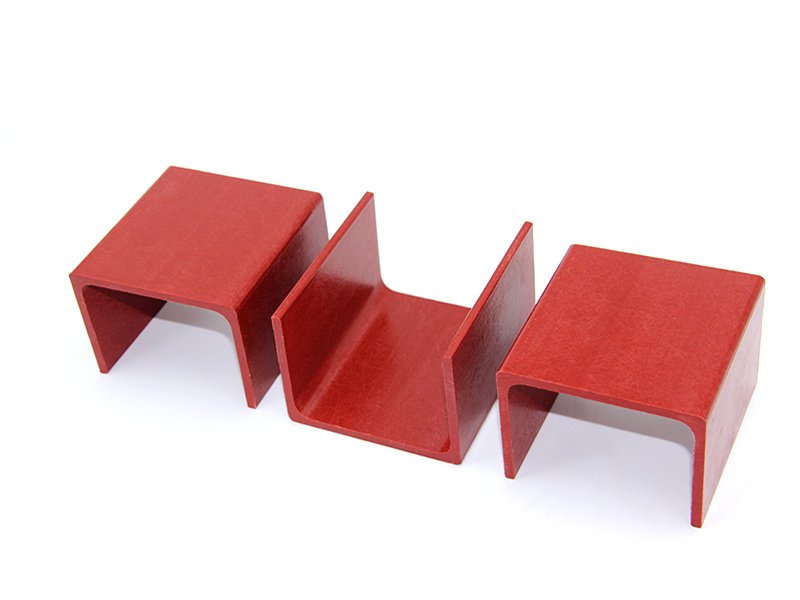
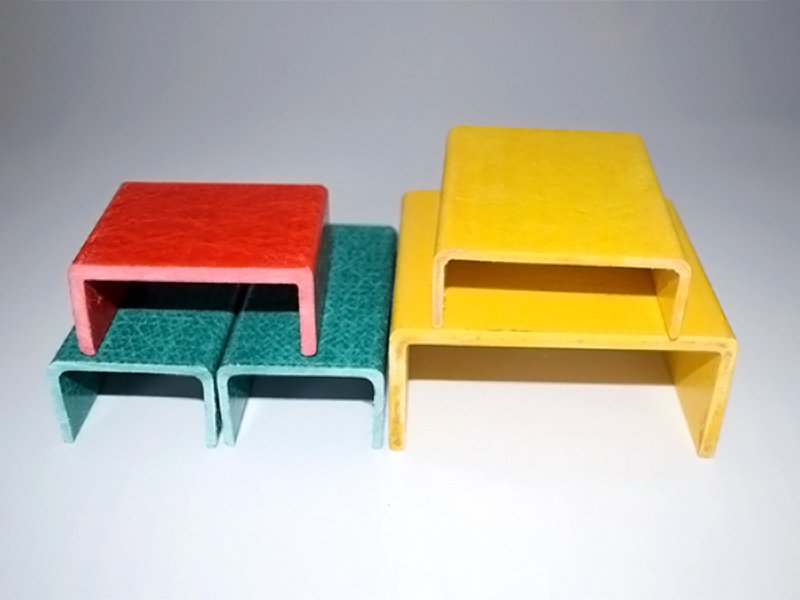
FRP Channel Profiles Manufacturer for Corrosion-Resistant Structures
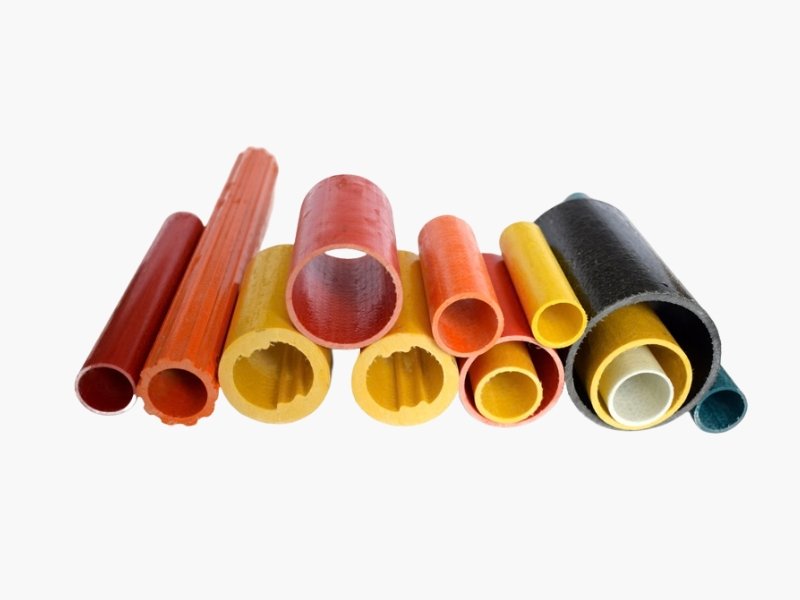
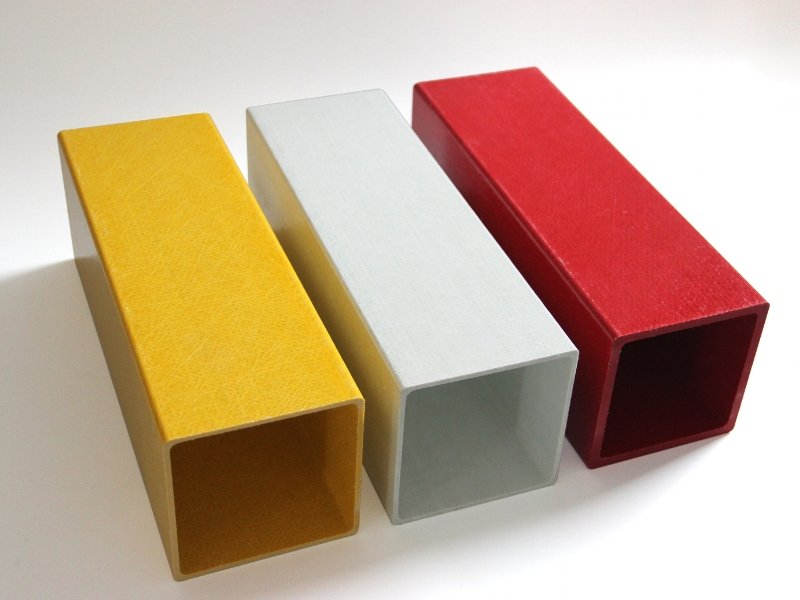
FRP channel beams are produced with fiberglass-reinforced resin and applications are construction, chemical industry and power projects. Tolike provide fully in-house made beams with corrosion resistance, rust-free performance and customizable sizes & colors.| Parameters | Data |
| Thickness: The thickness of the flange or the web of the channel. | It ranges from 1/8 inch to 1/2 inch. |
| Width: The width of the flange or the web of the channel. | It ranges from 9/16 inch to 6 inches. |
| Length: The length of the channel section. | It ranges from 10 feet to 20 feet. |
| Outside diameter: The outside diameter of the rectangular tube channel. | It ranges from 1 inch to 4 inches. |
| Color: The color of the channel surface. | It can be white, black, red, gray, green, orange, beige, yellow, blue, or custom. |
| Finish: The finish of the channel surface. | It can be smooth or textured. |
| Manufacturing process: The manufacturing process of the channel. | It can be pultrusion or extrusion. |
| Resin system: The resin system of the channel. | It can be standard polyester , fire retardant polyester , or vinylester fire retardant. |
Contact Our Team
Get professional support for pultrusion equipment, dies, and profilesGeneral Overview of FRP Channel Profiles
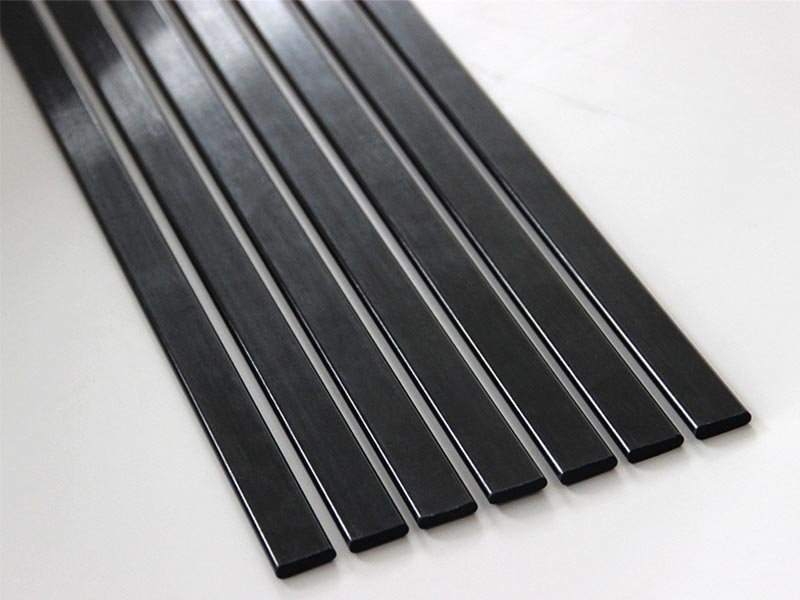
FRP channel profiles are structural sections made from fiber-reinforced polymer, typically combining continuous glass fibers with a thermosetting resin matrix. Their open channel cross-section provides a convenient structure for supporting, framing, fastening, and connecting components in industrial and infrastructure projects.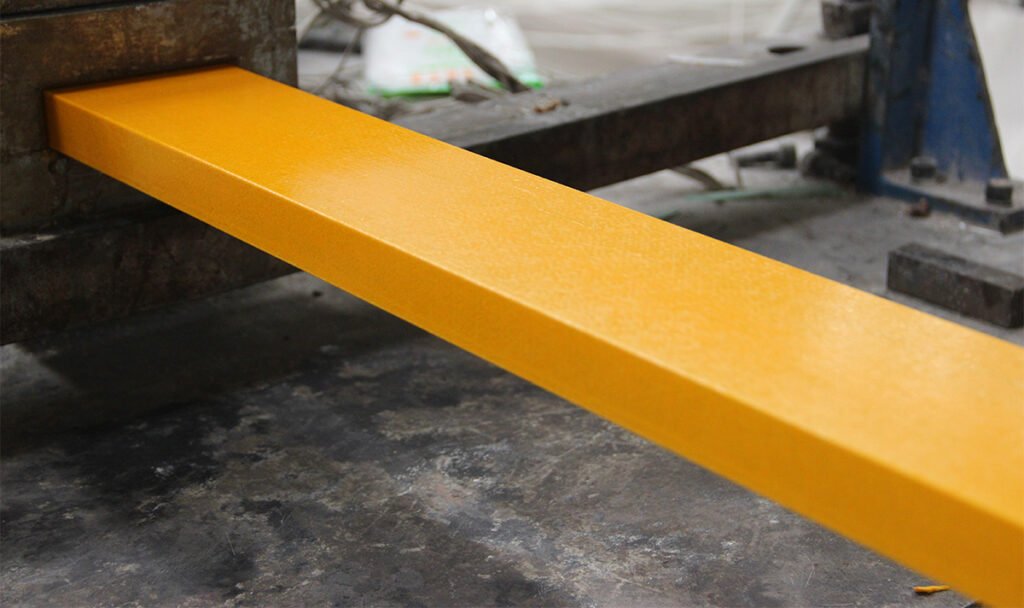
Often referred to as fiberglass channels, pultruded FRP channels, fiberglass C channels, or FRP U channels, these profiles are manufactured through pultrusion, a continuous process that pulls reinforcing fibers through a resin system and a heated forming die to produce a consistent cross-section.
Our pultruded FRP channel profiles are a robust, corrosion-proof structural option for marine and coastal applications.They beat traditional metal and wood profiles with light weight, anti-rust property and minimal maintenance.
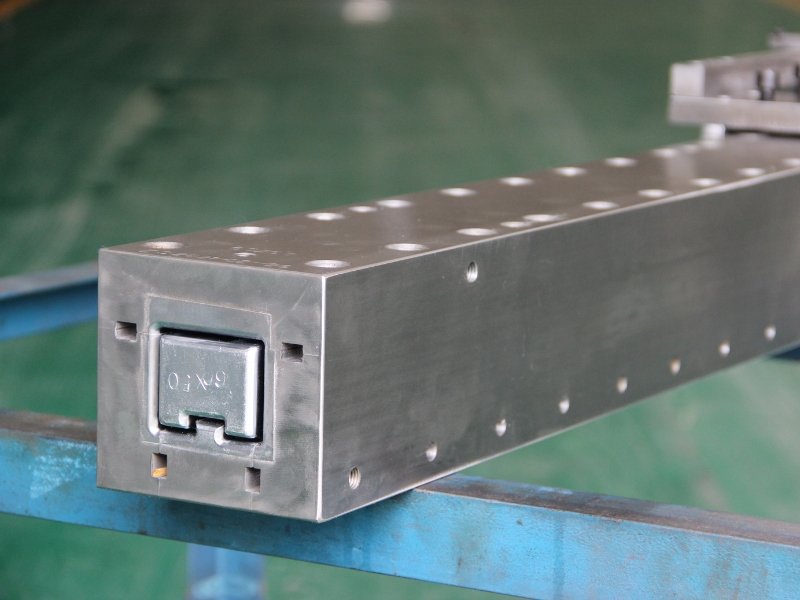
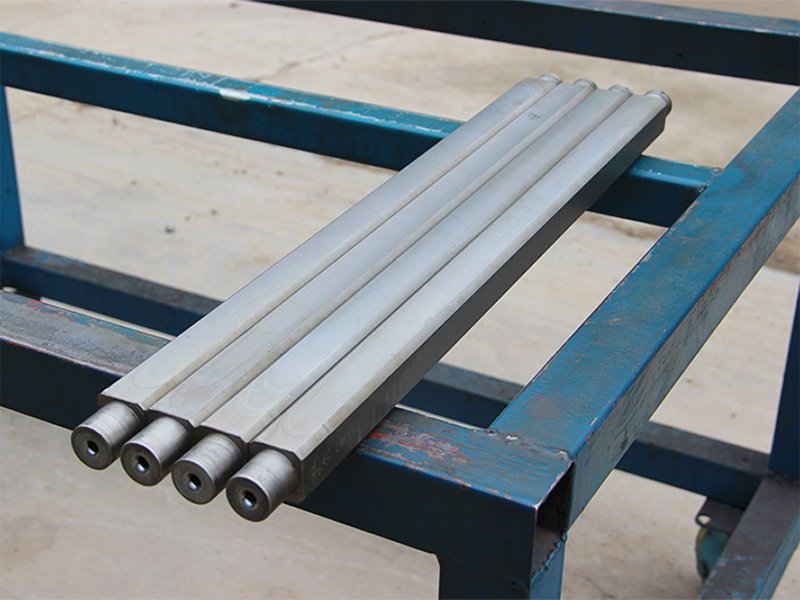
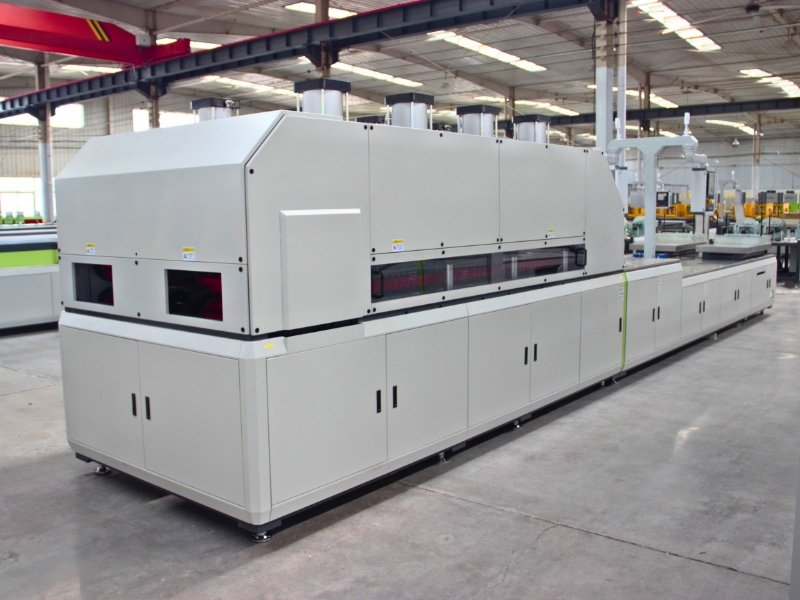
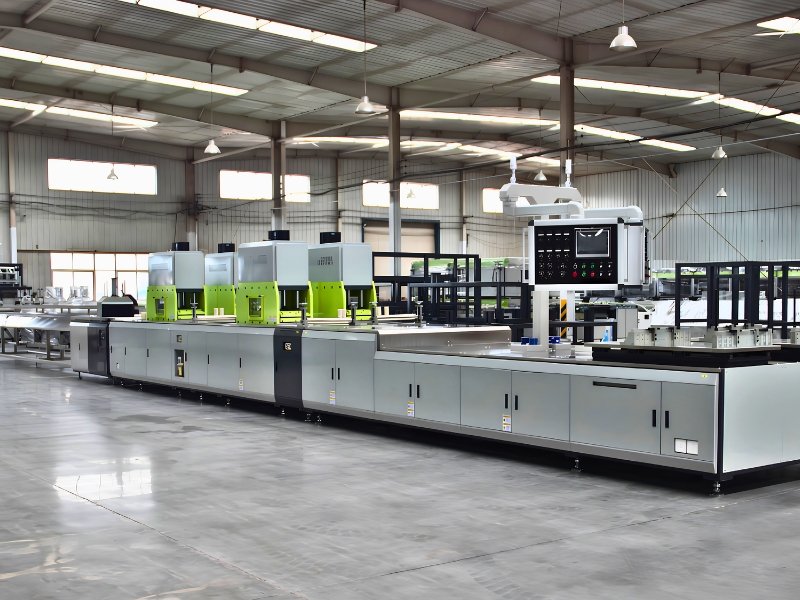
Tolike is a direct FRP channel profiles manufacturer with our own factories in China. We produce fiberglass pultruded channels in-house — from pultrusion dies to finished profiles. No outsourcing, no trading company in between.
Types of Pultruded FRP Channel Profiles
Different channel geometries support different assembly methods and structural requirements. TOLIKE can evaluate drawings and application conditions to help determine a suitable profile configuration.
FRP C Channel Profiles
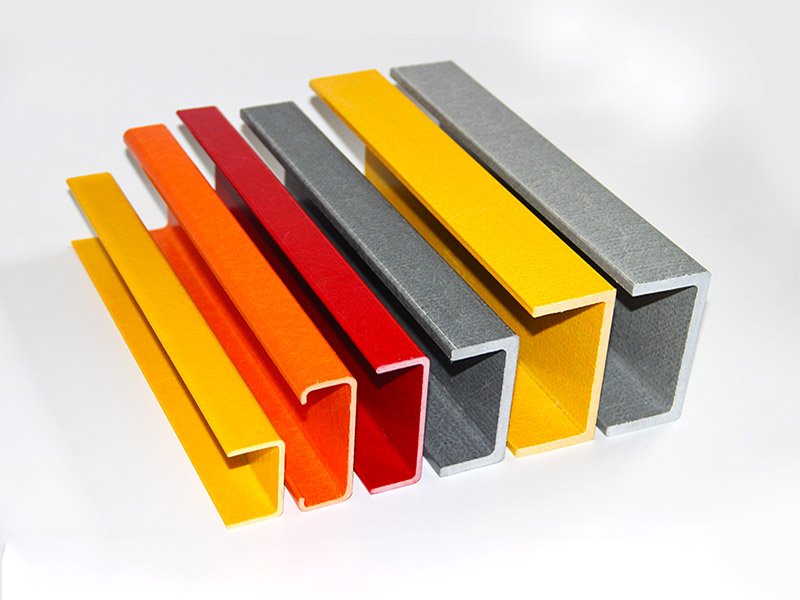
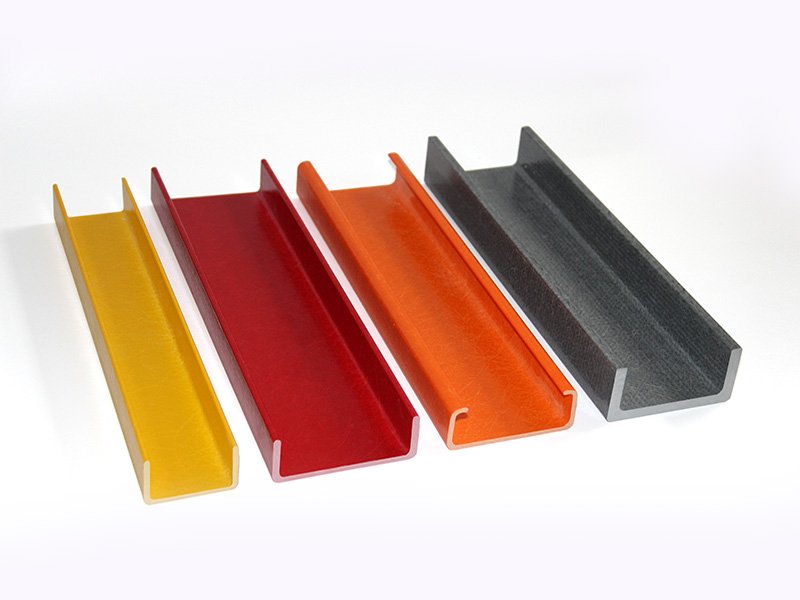
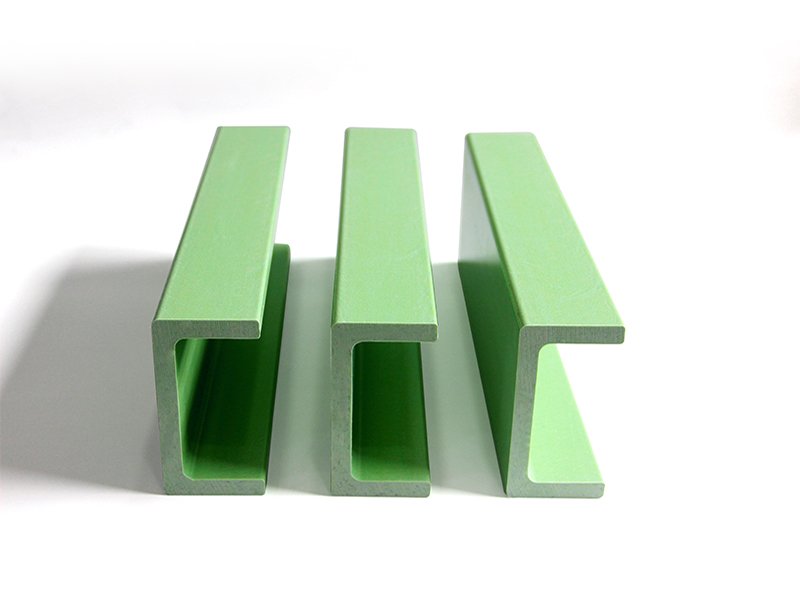
FRP C channels feature a web and two flanges forming a C-shaped cross-section. They are commonly considered for structural framing, equipment supports, cable management structures, walkways, and industrial assemblies.
Their open geometry allows components to be positioned and fastened along the channel, subject to the design of the connection and the intended load.
Typical applications include:
Fiberglass U Channel Profiles
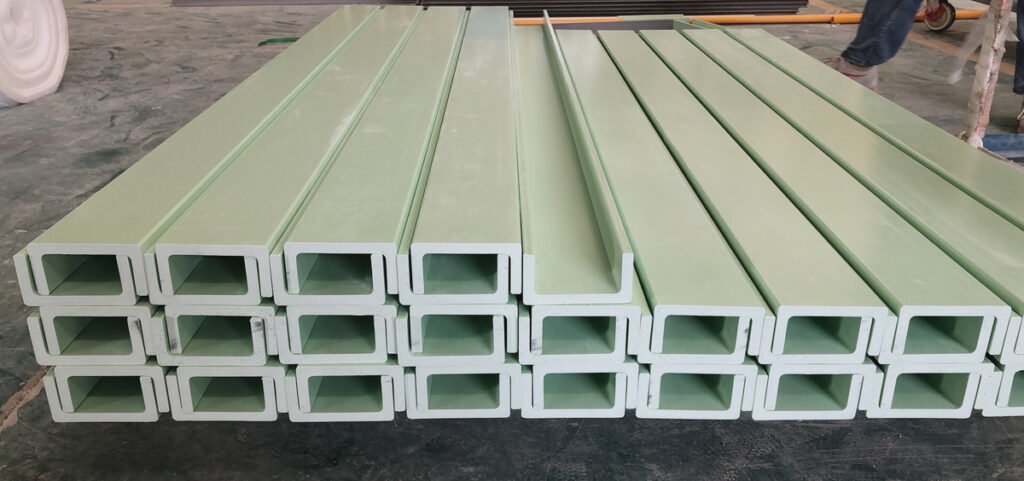
Fiberglass U channels have a U-shaped cross-section and are used in guiding, edging, supporting, and framing applications. Depending on their dimensions and design, they may serve as secondary structural members or components in custom assemblies.
Common application areas include:
C-channel and U-channel terminology can overlap between suppliers. For accurate selection, confirm the cross-sectional drawing, flange orientation, dimensions, and connection details rather than relying on the product name alone.
Why Choose FRP Channel Profiles for Structural Projects?
Corrosion Resistance
FRP channel profiles will not rust. When paired with a suitable resin formulation, they withstand many aggressive substances found in wastewater plants, chemical processing sites, and coastal projects. In those same environments, steel typically requires protective coatings and recurring maintenance. FRP offers a durable, low-maintenance alternative.
Lightweight & Easy to Handle
A pultruded FRP channel weighs less than a comparable steel section. That lower weight simplifies transport, on-site handling, and installation — particularly for elevated structures and modular assemblies.
Electrical Insulation
Fiberglass channels are non-conductive and non-magnetic. This makes them a practical choice for cable support structures, electrical installations, and power infrastructure where metal channels could introduce safety concerns.
High Strength, Design Flexibility
Glass fiber reinforcement runs continuously through the profile, giving fiberglass structural channels a high strength-to-weight ratio. They can be engineered for equipment frames, brackets, and support structures. Section size must match the actual load, span, and operating conditions.
|
Performance Metric |
Pultruded FRP Channel |
Structural Carbon Steel |
Stainless Steel / Aluminum |
|
Corrosion Resistance |
Excellent (Chemical & Acid Resistant) |
Poor (Rusts easily) |
Moderate to High (Expensive) |
|
Weight-to-Strength Ratio |
High (75% lighter than steel) |
Low (Heavy) |
Moderate |
|
Electrical Conductivity |
Non-Conductive (Electrical Insulating) |
High Conductor |
High Conductor |
|
Thermal Conductivity |
Extremely Low |
High |
High |
|
Maintenance Cost |
Virtually Zero Lifecycle Cost |
High (Requires Painting/Galvanizing) |
Moderate |
Applications of Fiberglass Channel Profiles
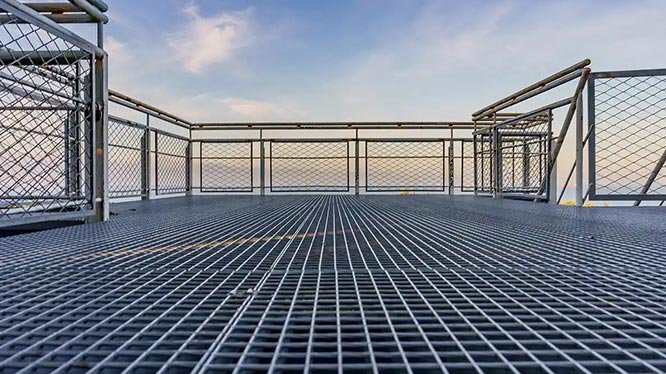
FRP channel profiles are used where steel would rust, corrode, or conduct electricity.
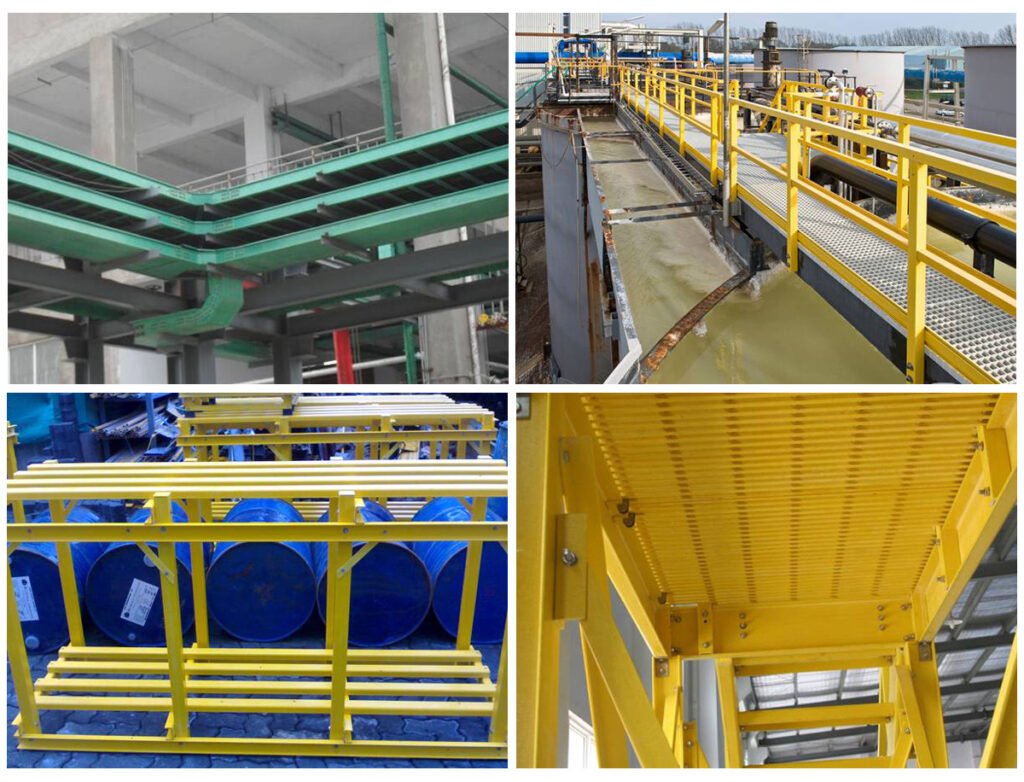
For projects that need a lightweight, corrosion-resistant alternative to steel, pultruded FRP channels are a practical long-term choice.