
Fiberglass Tubes
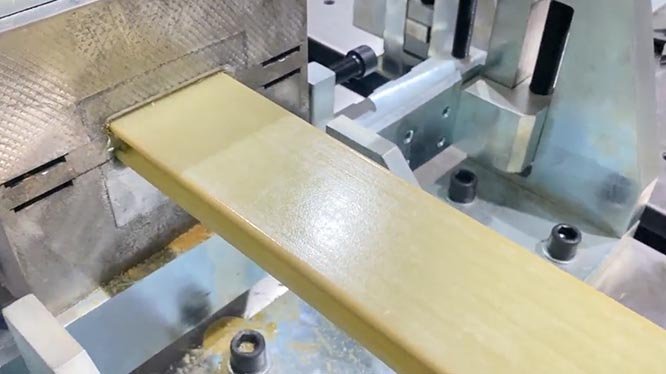
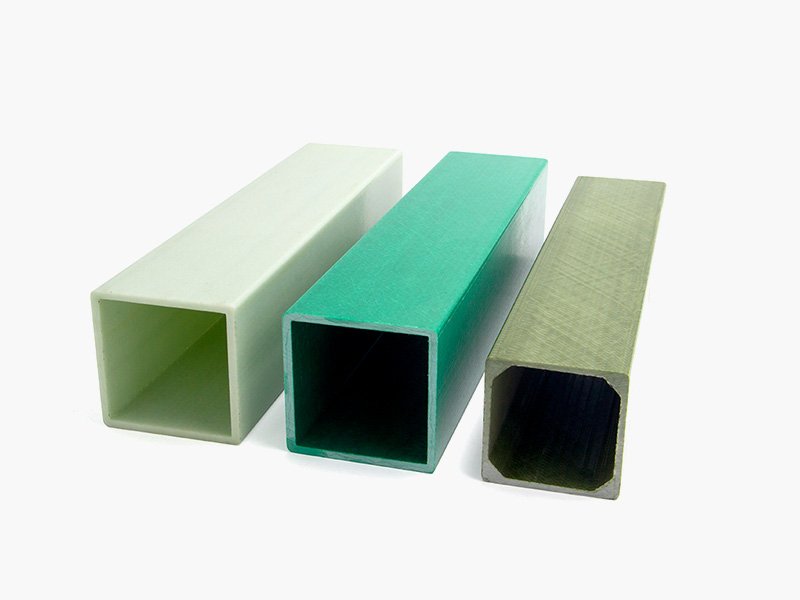
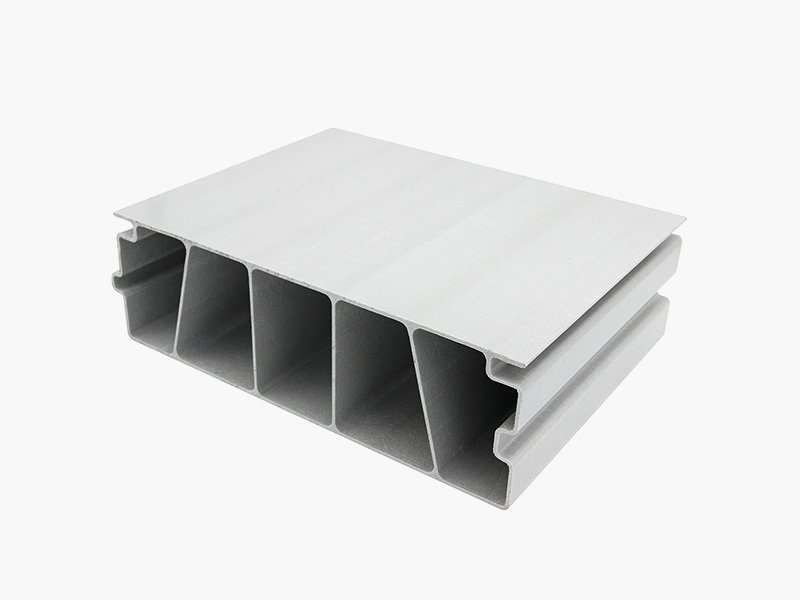
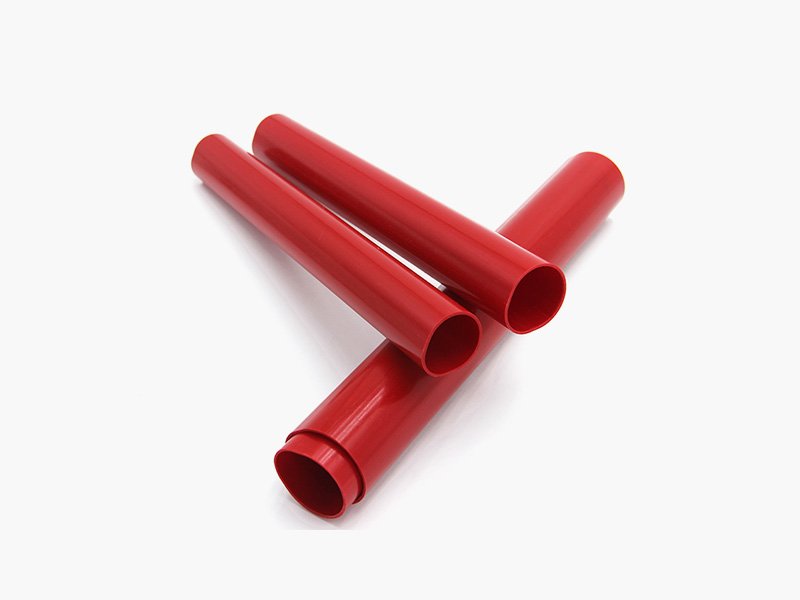
Fiberglass Tubes are structural pultruded profiles with excellent corrosion resistance, electrical insulation, and non-magnetic properties. They effectively reduce weight and material consumption while maintaining high structural strength, helping to lower overall costs. We supply pultruded profiles in various cross-sectional shapes, including round, square, and rectangular tubes.| Parameter | Specification |
| Tube Shape | Round tubes, square tubes, Fiberglass Rectangular Tubes, special-shaped sections |
| Outer Diameter | Customized, approx. 10–400 mm |
| Inner Diameter | Defined by outer diameter and wall thickness, customizable for applications. |
| Wall Thickness | 1.5–50 mm (customizable) |
| Standard Length | 6 m / 12 m or customized length |
Contact Our Team
Get professional support for pultrusion equipment, dies, and profilesProduct Advantages
Fiberglass tubes offer excellent overall performance and can be flexibly customized to meet different operating conditions, replacing traditional materials such as steel and plastic.
01
Lightweight, High Strength
Density of 1.5–2.0 g/cm³, approximately one-quarter that of steel, while longitudinal tensile strength can exceed 200 MPa, providing a higher strength-to-weight ratio than conventional carbon steel.
02
Corrosion Resistance
Resistant to acids, alkalis, salts, and most organic solvents, eliminating the need for additional anti-corrosion coatings required for steel pipes and significantly reducing long-term maintenance costs in chemical processing environments.
03
Electrical Insulation
Volume resistivity ≥10¹³ Ω·cm. Non-conductive and non-magnetic, making it suitable for various power and electrical applications.
04
Dimensional Stability
Pultrusion provides high cross-sectional dimensional accuracy and a lower coefficient of thermal expansion than plastic pipes, preventing deformation and warping during long-term use.
05
Smooth Inner Surface
A roughness coefficient of approximately 0.0084 reduces fluid resistance and minimizes scaling. For the same flow rate, a smaller pipe diameter can be used compared with steel pipes.
06
Long Service Life
More than 30 years under normal operating conditions, with a designed service life of up to 50 years for underground applications.
Performance Specifications
| Parameter | Specification |
| Product Type | Pultruded Fiberglass Tube / FRP Tube |
| Manufacturing Process | Pultrusion Process |
| Outer Diameter | Customized, approx. 10–400 mm |
| Inner Diameter | Customized according to application requirements |
| Wall Thickness | 1.5–50 mm (customizable) |
| Maximum Length | Up to 12 m+ depending on transportation requirements |
| Resin System | Unsaturated Polyester Resin, Vinyl Ester Resin, Epoxy Resin, and Polyurethane Resin. |
| Glass Fiber Content | 50–70% (customizable based on strength requirements) |
| Fire Retardant Grade | Optional according to application requirements |
Fiberglass Tube Shapes
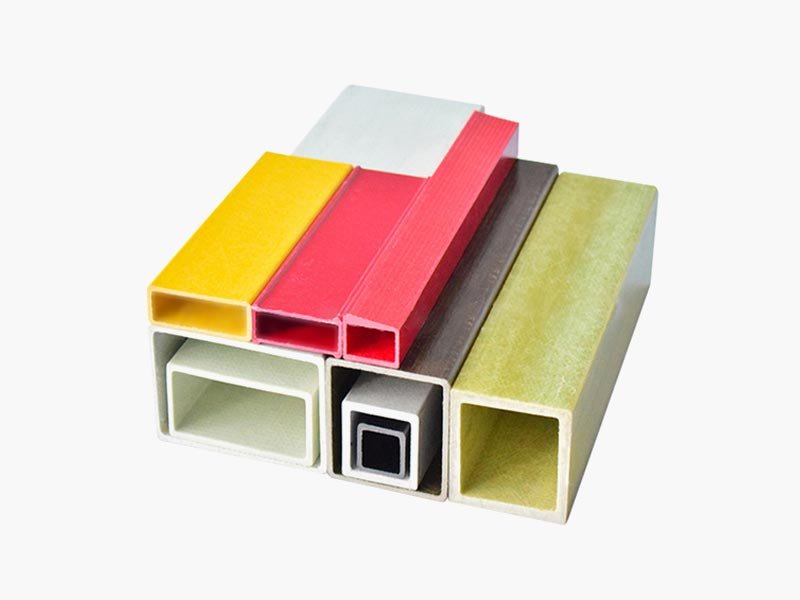
Fiberglass tubes are available in various cross-sectional shapes, including round tubes, square tubes, rectangular tubes, and custom profiles with special cross-sections to meet specific requirements.
Square Tubes
Product Features:
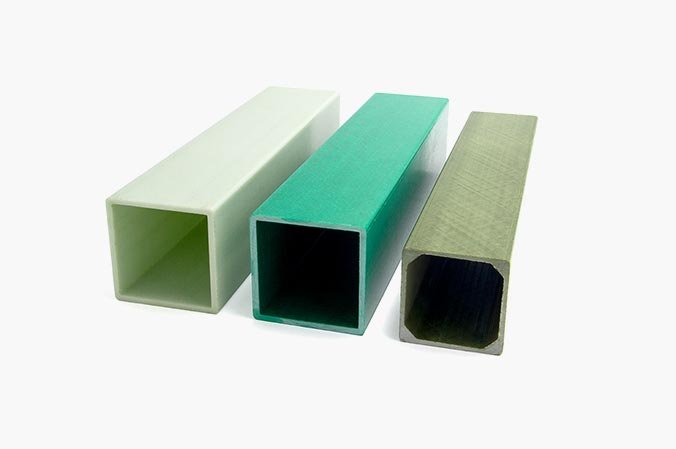
Lightweight, high strength, corrosion resistance, excellent electrical insulation, and good aging resistance. Fiberglass square tubes are widely used in municipal construction, landscape engineering, building structures, wastewater treatment, and other applications.
Product Specifications:
- Outer Dimension: Common sizes range from small to large, including 30mm, 40mm, 50mm, 60mm, 80mm, and 100mm.
- Wall Thickness: Common wall thicknesses include 2mm, 3mm, 4mm, and 5mm.
The specifications of fiberglass square tubes are typically expressed as outer dimension × wall thickness, for example, 30mm × 2mm, 40mm × 3mm, etc.
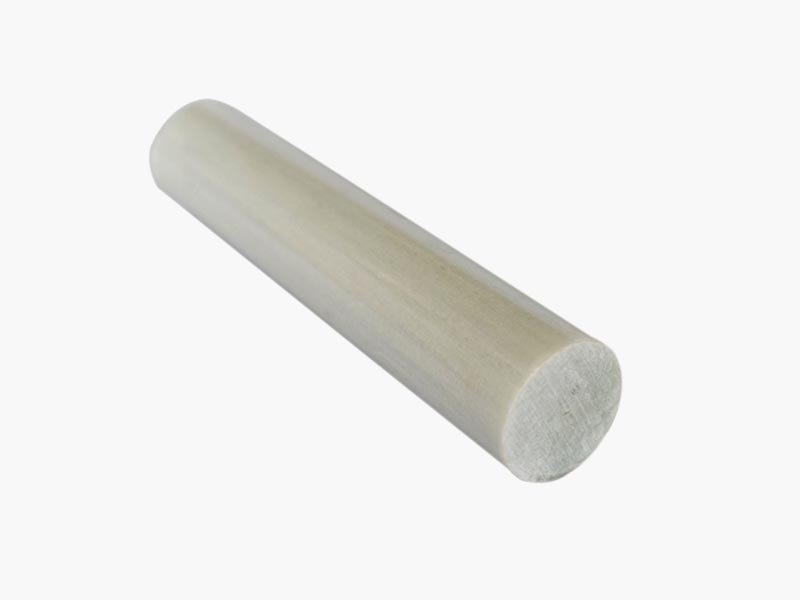
Round Tubes
Product Features:
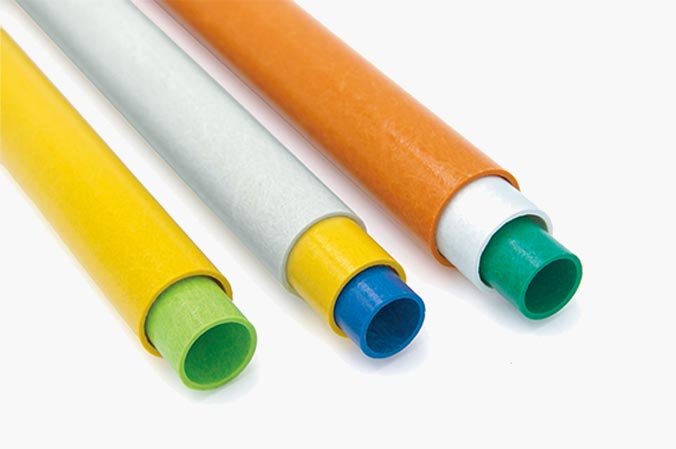
- Excellent resistance to chemical and environmental corrosion
- High strength, lightweight, and impact resistance
- Excellent electrical insulation and magnetic permeability
- Aging resistance, long service life, and maintenance-free operation
- Fire retardant, with excellent insulation and thermal resistance
- Quick and convenient installation and cutting
- Highly designable with an attractive appearance
Provides uniform load distribution and low fluid resistance, serving as both structural support components and corrosion-resistant conveying pipes.
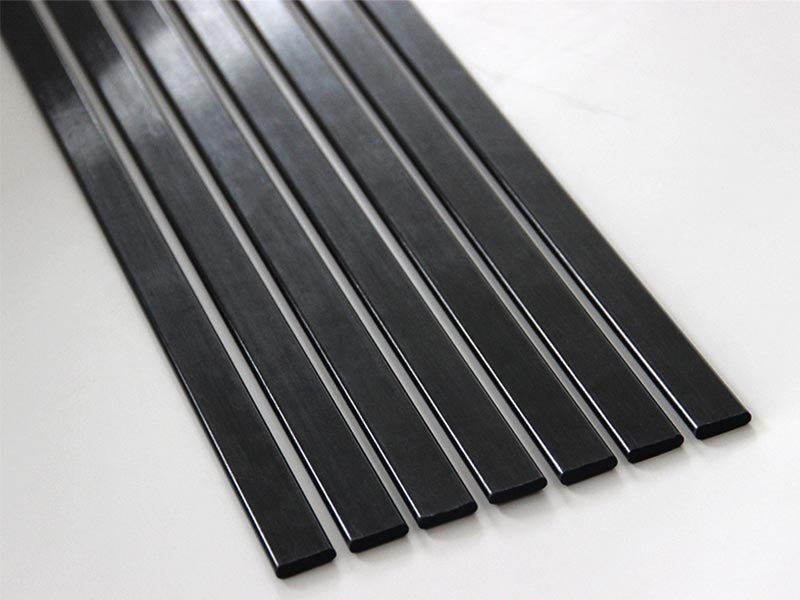
Fiberglass Rectangular Tubes
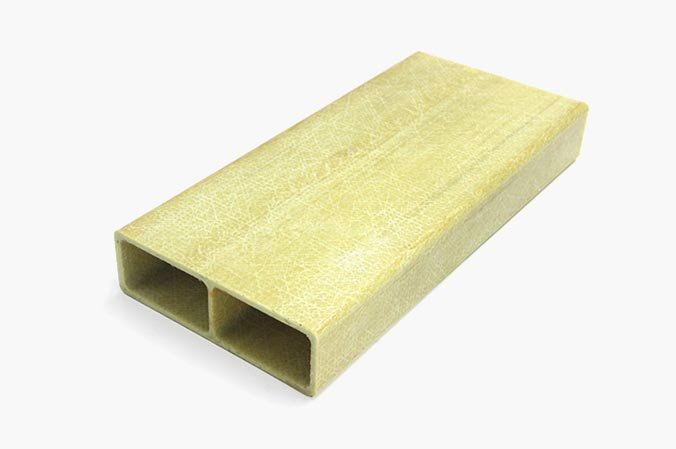
Product Features:
- Lightweight and high strength
- Resistant to acids, alkalis, and salts
- Electrically insulating and non-magnetic
- Excellent aging resistance and long service life
- Long and short sides can be customized to meet different load-bearing requirements
- Widely used in landscape railings, building frames, wastewater treatment equipment supports, equipment frames, and other applications.
The long and short side sections provide excellent bending resistance, suitable for asymmetric load conditions. Both side dimensions can be customized for non-standard requirements.
Applications
Fiberglass tubes offer a wide range of applications due to their lightweight, high strength, corrosion resistance, and electrical insulation properties.
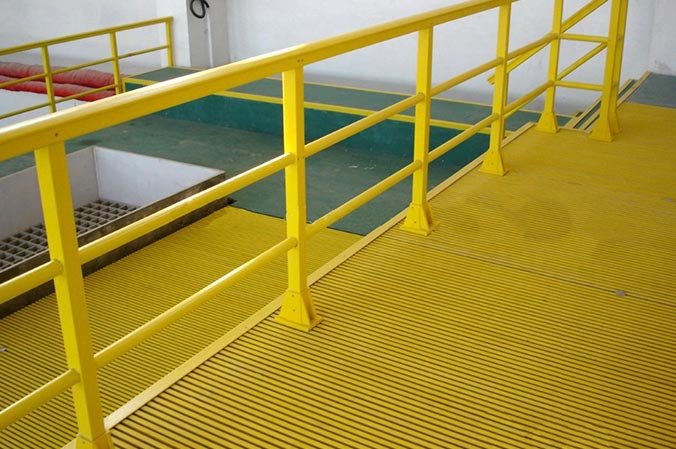
Chemical Corrosion Protection
Chemical plants handle acidic and alkaline media that corrode steel pipes, shortening their service life. Fiberglass tubes offer excellent corrosion resistance without additional coatings.
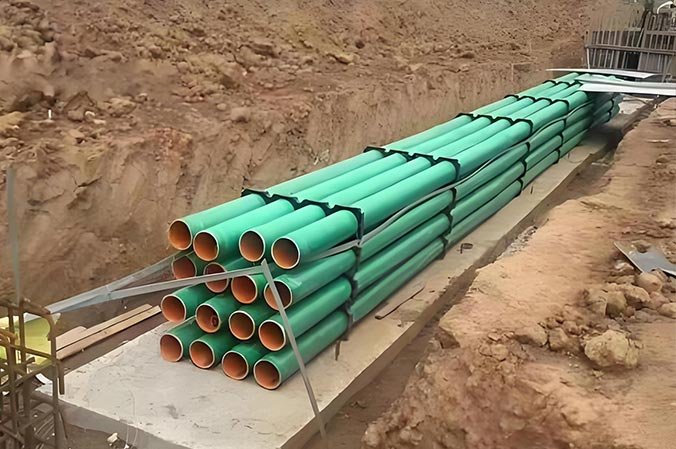
Power and Electrical
Non-conductive and non-magnetic, fiberglass tubes are widely used in the power industry for cable protection and insulated tools designed for safe live-line work.
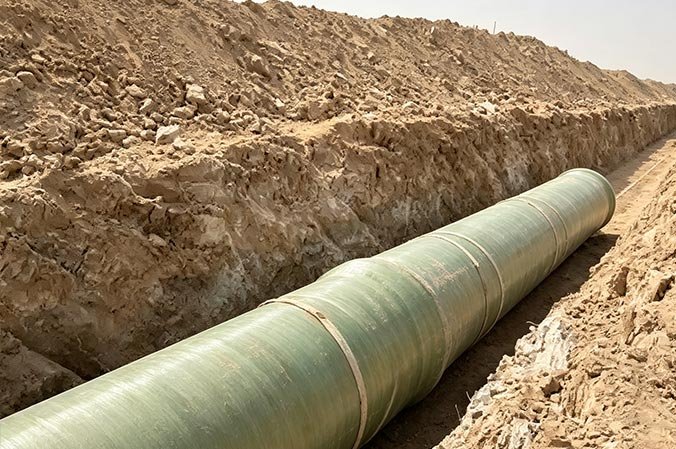
Municipal Engineering
Underground piping systems require high ring stiffness and a long service life. Pultruded tubes can have a designed underground service life of up to 50 years without corrosion or aging.
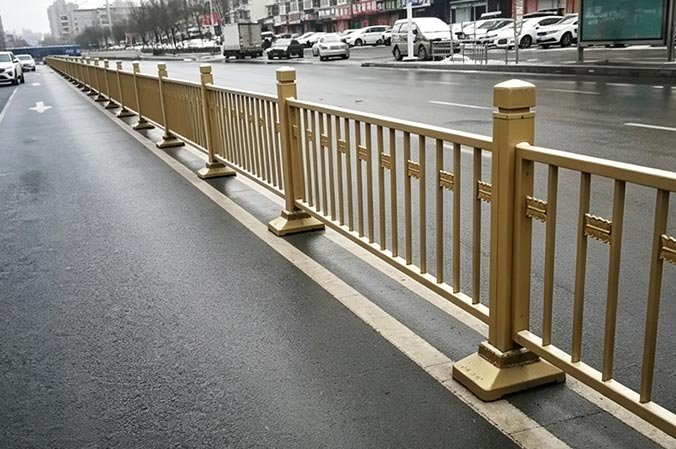
Transportation Infrastructure
Outdoor exposure to prolonged sunlight and rain can cause steel to corrode. Pultruded tubes offer excellent weather resistance and relatively low long-term maintenance costs.
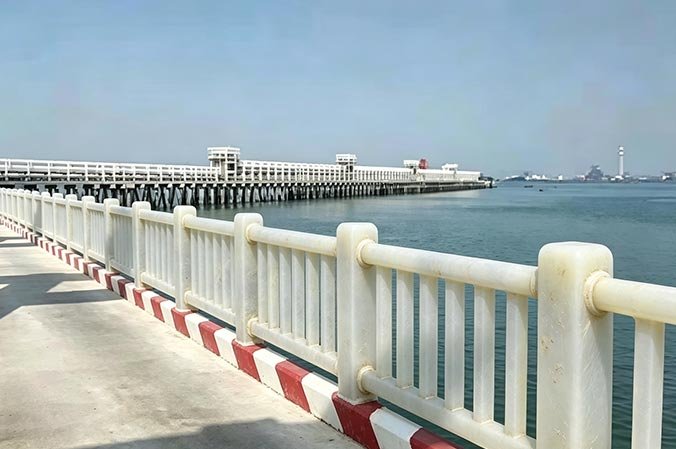
Marine Engineering
Seawater is highly corrosive, requiring frequent metal maintenance. Pultruded tubes offer excellent seawater corrosion resistance and stable performance under immersion.
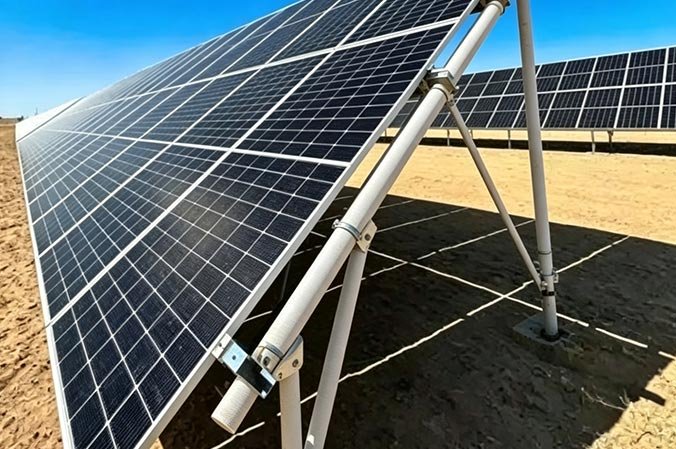
Renewable Energy
Wind power and photovoltaic applications have high requirements for lightweight and electrical insulation. Pultruded tubes are well suited to these applications.
Solid Tubes vs. Hollow Tubes
Many customers struggle to choose between solid and hollow fiberglass tubes. The table below summarizes the key differences between the two types for easy comparison.
| Comparison Item | Solid Tube | Hollow Tube |
| Cross-Section Structure | Solid, with no internal bore | Hollow, with an internal bore |
| Weight | Heavier at the same outer diameter and requires more material | 30%–60% lighter, reducing material consumption and shipping costs |
| Bending Strength | Higher section modulus and stronger bending resistance | Slightly lower, but with a higher specific strength (strength-to-weight ratio) |
| Radial Compressive Strength | Uniform in all directions with good compressive strength | Depends on wall thickness; thin-wall tubes have lower radial compressive strength |
| Cost | Higher material consumption and relatively higher unit cost | Lower material consumption and better cost-effectiveness |
| Typical Applications | Insulating rods, anchor rods, structural cores, tool handles | Conveyance pipes, cable protection tubes, structural frames, guardrails |
Select the Resin System Based on Operating Conditions
| Typical Applications | Corrosion Resistance / Performance Grade | Recommended Resin Type | Key Features | Typical Applications |
| General environments without severe corrosion | Cost-Effective | Orthophthalic Unsaturated Polyester Resin | Lowest cost, with stable mechanical properties at room temperature | Structural components, guardrails, and pipe support arms without special corrosion resistance requirements |
| Mild acids and alkalis, wastewater treatment | Moderate Corrosion Resistance / Cost-Performance | Isophthalic Unsaturated Polyester Resin or Bisphenol A-Based Unsaturated Polyester Resin | Significantly better corrosion resistance than orthophthalic grades, with good resistance to dilute acids and alkalis; Bisphenol A-based grades offer superior resistance to alkaline media | Wastewater treatment and components for the metallurgical industry |
| High mechanical strength / electrical insulation | High Strength | Epoxy Resin | Strong bonding strength, excellent dielectric properties, and high mechanical strength, but at a higher cost | Insulated operating rods, dry-type transformer insulation rods, and high-end electrical structural components |
| Strong acids and alkalis, organic solvents | Severe Corrosion Resistance / Preferred for Corrosion Resistance | Vinyl Ester Resin (VER) | Combines the corrosion resistance of epoxy resin with the good processability of polyester resin, providing resistance to high-concentration acids and alkalis, oxidizing agents, and organic solvents | Chemical pipelines, desulfurization towers, and structural components for heavy-duty corrosion-resistant equipment |
| Wear- and impact-resistant applications | Moderate Corrosion Resistance | Polyurethane Resin | Excellent toughness, impact resistance, and wear resistance, with good lightweighting potential; limited temperature and severe corrosion resistance | Outdoor impact-resistant components, wear-resistant conveying components, and lightweight load-bearing profiles |