In industrial plants, wastewater treatment facilities, chemical processing areas, and equipment maintenance platforms, walkway grating must not only provide safe access for personnel but also offer reliable load-bearing capacity, slip resistance, and environmental durability. For walkways exposed to moisture, corrosive substances, or outdoor conditions over extended periods, grating selection also affects long-term maintenance requirements and overall operating costs.
Fiberglass grating is a type of fiberglass-reinforced plastic grating assembled from pultruded load-bearing bars. Compared with conventional steel grating, FRP pultruded grating is relatively lightweight, corrosion-resistant, and easy to handle and install on-site, making it suitable for various industrial walkways and maintenance platforms.
However, selecting the right Fiberglass grating involves more than simply determining panel dimensions. The cross-sectional shape of the load-bearing bars, bar spacing, support span, load requirements, surface finish, and operating environment must all be considered during the selection process.
This article examines the structural characteristics, key performance factors, and purchasing considerations of Fiberglass grating from practical application and engineering selection perspectives, helping project purchasers and engineering professionals choose suitable grating panels for industrial walkways.
What Industrial Applications Are Suitable for FRP Grating?
FRP grating is primarily used for industrial walkways, equipment maintenance platforms, elevated walkways, and similar areas. Its suitability depends on product specifications, loading conditions, and the actual operating environment.
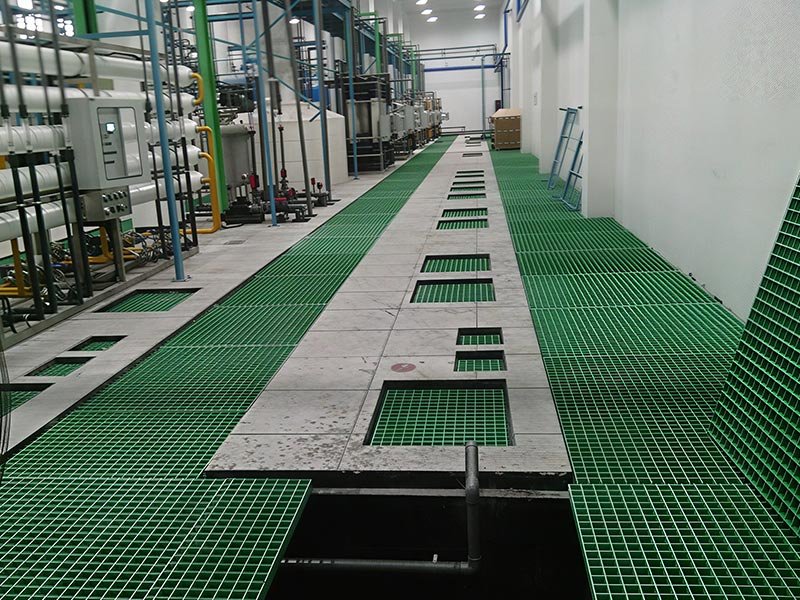
Industrial Plants and Equipment Maintenance Walkways
In various manufacturing facilities, FRP grating can be used for walkways around equipment, elevated maintenance platforms, and operating areas. For production lines requiring frequent inspections, a well-designed grating layout can provide stable access areas that are easy to maintain over time.

Wastewater Treatment and Water Treatment Facilities
Wastewater treatment facilities are often exposed to high humidity, standing water, and certain chemical agents. Selecting the appropriate FRP grating can reduce maintenance requirements associated with some metal materials in corrosive environments. The open-grid structure also facilitates liquid drainage.
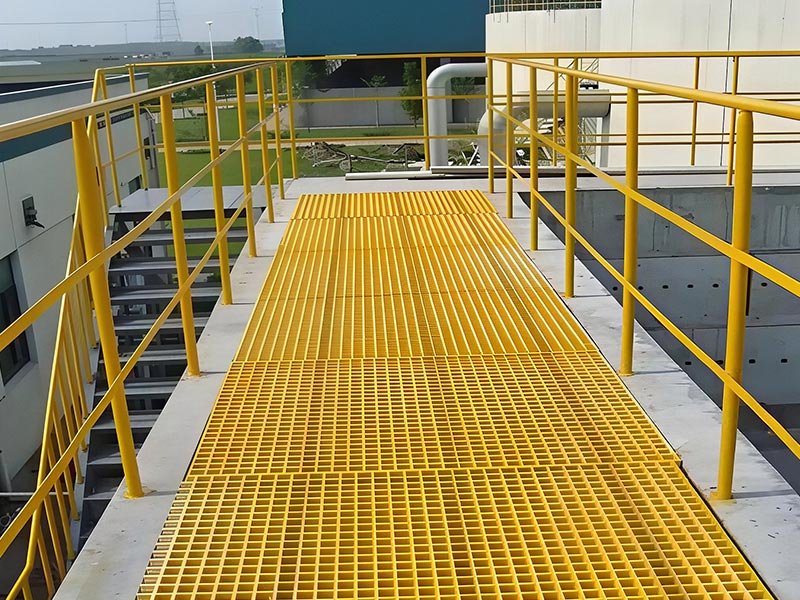
Chemical Processing Areas
Walkways in chemical processing facilities may be exposed to acids, alkalis, salt solutions, or other chemicals. The appropriate resin system should be selected based on chemical type, concentration, temperature, and exposure duration. Product selection should not rely solely on FRP’s general corrosion resistance.
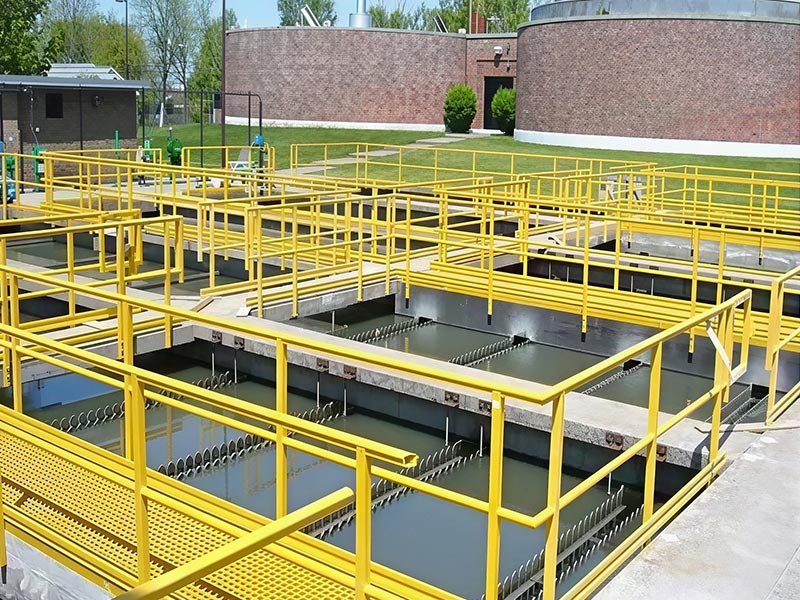
Outdoor Industrial Platforms and Coastal Facilities
Outdoor maintenance walkways, open-air platforms, and coastal industrial facilities require careful consideration of UV degradation, temperature cycling, rainwater exposure, and salt spray corrosion to evaluate the material’s long-term performance and stability.
How Do the Structural Features of Fiberglass grating Affect Product Selection?
Understanding the structural components of Fiberglass grating is essential for determining its load-bearing capacity and installation method.
Pultruded Load-Bearing Bars
The main load-bearing bars of Fiberglass grating are continuously formed through the pultrusion process, with glass fibers aligned along the length of the profiles. This fiber orientation gives the bars pronounced directional load-bearing characteristics.
The cross-sectional shape, height, wall thickness, and spacing of the load-bearing bars all affect the overall stiffness and load capacity of the grating. Even products with similar overall dimensions may have different load-bearing capacities due to variations in structural specifications and should not be considered equivalent.
Transverse Connecting Rods
Transverse connecting rods join the load-bearing bars to maintain the structural integrity of the grating panel. Their spacing and connection methods affect the overall stability of the grating and its local load distribution.
It is important to note that transverse connecting rods should not be assumed to have the same span load-bearing capacity as the main load-bearing bars. Grating panels must be installed according to the load-bearing direction and installation requirements specified by the manufacturer.
Open-Grid Structure
The load-bearing bars and transverse connecting rods form an open-grid structure that allows water and debris to pass through, providing effective drainage and ventilation.
The size of the grid openings affects drainage, pedestrian safety, and the prevention of small objects from falling through. Therefore, when selecting a product, determine the spacing of both the load-bearing bars and transverse connecting rods according to the intended application, rather than considering only the overall length of the grating panel.
How Should the Load-Bearing Capacity of Fiberglass grating Be Determined?
Load-bearing capacity is a key technical criterion when selecting pultruded grating. In addition to pedestrian traffic, walkway grating may need to support maintenance tools, service equipment, and the additional loads imposed by small mobile vehicles. Since loads are primarily carried along the direction of the load-bearing bars, capacity verification must consider the load type, profile specifications, and support conditions together.
1. Identify the Types of Loads on Site
During the initial selection process, first identify the load conditions the walkway must withstand:
Walkways intended solely for personnel inspections have significantly different design requirements from platforms that permit small equipment to travel across them. For concentrated loads and wheel loads in particular, confirm in advance whether the manufacturer provides corresponding tested load-bearing data.
2. Determine the Load-Bearing Bar Direction and Support Span
During installation, the main load-bearing bars of Fiberglass grating must be oriented along the support span and supported by the underlying support frame. For the same product specifications and with all other conditions unchanged, a longer support span results in greater panel deflection and a lower allowable load capacity.
During the selection process, the following factors should be carefully verified:
3. Select Specifications Based on the Manufacturer’s Load Tables
Fiberglass grating from different manufacturers, with different cross-sectional designs and bar spacings, can have significantly different load-bearing performance. During product selection, consult the manufacturer’s load tables to verify the allowable load and deflection limits for the specified support span. Load-bearing capacity should not be estimated solely from panel thickness, and the ultimate failure load must never be treated as the allowable service load.
For projects involving high concentrated loads, vehicle traffic, or special dynamic loading conditions, the project design engineer should conduct a dedicated assessment of both the grating panels and the underlying support structure.
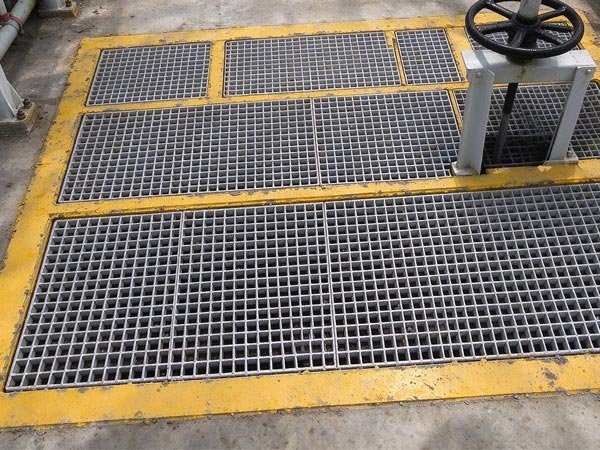
How Should Fiberglass grating Be Selected for Wet or Oily Environments?
The slip resistance of industrial walkway surfaces is essential for ensuring pedestrian safety. Rainwater, washdown water, lubricating oil, and residual process materials can all reduce surface friction and increase the risk of slips and falls. When selecting Fiberglass grating, the surface finish offered by the manufacturer must be matched to the contaminants present in the operating environment.
Gritted Anti-Slip Surface Finish
A gritted anti-slip finish is a common surface treatment for Fiberglass grating. It creates a rough, slip-resistant walking surface that improves traction underfoot.
Slip resistance is not a fixed value; it is affected by several factors, including the surface treatment process, contaminants present on-site, and footwear sole materials. Areas exposed to standing water alone have significantly different anti-slip requirements from environments where surfaces are regularly contaminated with oil.
Select the Surface Finish According to Operating Conditions
Before selecting a product, determine whether the walkway will be exposed to rainwater, washdown water, oil, or other process media. Confirm surface finish options with the supplier.
If the project specifies slip-resistance requirements, request the test report and verify that conditions reflect the actual operating environment. A product labeled “slip-resistant” is not automatically suitable for all wet or oil-contaminated conditions.
Consider Drainage and Maintenance Cleaning
The open-grid structure of pultruded grating allows liquids and debris to pass through easily. However, drainage and cleaning conditions beneath the grating must also be assessed during product selection.
If electrical equipment, pedestrian areas, or other facilities requiring protection are located beneath the grating, potential secondary effects caused by leaking liquids or falling debris must be evaluated in advance.
Slip resistance is only one aspect of walkway safety. Secure installation and fastening, a stable support frame, regular cleaning and maintenance, and appropriate edge protection measures are equally important.
Which Is Better for Industrial Walkways: Fiberglass grating or Steel Grating?
Both Fiberglass reinforced plastic grating and steel grating are suitable for industrial walkways, but they differ in weight, corrosion resistance, installation requirements, and long-term maintenance.
|
Comparison Criteria |
Fiberglass grating |
Steel Grating |
|
Corrosion Resistance |
Can be used in various corrosive environments, depending on the resin system selected |
Carbon steel typically requires a protective coating or other anti-corrosion measures. |
|
Material Weight |
Generally lightweight, facilitating handling and installation |
Generally heavier, depending on structural specifications. |
|
Structural Characteristics |
Relies primarily on pultruded load-bearing bars to support span loads |
Depends on steel cross-sections, welded construction, and design approach. |
|
Installation Requirements |
Load-bearing bars must be oriented correctly and secured according to specifications |
Installation should be carried out according to the specific structure and connection methods. |
|
Ongoing Maintenance |
Can reduce maintenance related to corrosion when used in appropriate environments |
Maintenance requirements depend on the material, protective system, and operating environment. |
|
Initial Cost |
Varies based on product specifications, materials, and processing requirements |
Depends on the material, fabrication, and protective treatment. |
How Should Total Cost of Ownership Be Evaluated?
The actual cost of an industrial walkway includes not only the purchase price of the grating panels but also transportation, installation, support structures, corrosion protection, routine inspections, and future replacement costs.
In corrosive environments, suitable fiberglass grate may reduce some maintenance work associated with metal corrosion. Its relatively low weight may also make on-site handling easier. However, the actual cost savings depend on the project structure and installation conditions.
Steel grating may be more suitable for certain applications with specific requirements for material properties, operating temperatures, impact resistance, or project standards.
It is recommended to compare the two materials under the same load requirements, operating conditions, and expected service life rather than making a decision based solely on the initial purchase price.
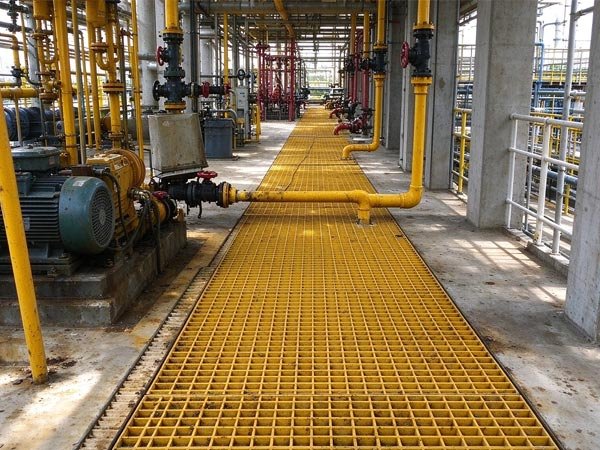
How to Determine the Bar Height, Spacing, and Panel Dimensions of Fiberglass grating
When determining the specifications of Fiberglass grating, key factors include the cross-sectional shape of the load-bearing bars, bar spacing, transverse connecting rod spacing, open-area ratio, and panel dimensions. These parameters collectively affect load-bearing performance, drainage capacity, and installation compatibility.
Load-Bearing Bar Height and Cross-Sectional Shape
The height and cross-sectional shape of the load-bearing bars directly determine the stiffness and load-bearing capacity of the grating. Even when profile heights are identical, products with different cross-sectional designs can have different structural performance.
Therefore, product selection should be based on the support span, design loads, and allowable deflection limits. A taller profile does not necessarily provide the most suitable solution.
Load-Bearing Bar Spacing and Transverse Connecting Rod Spacing
The spacing between load-bearing bars determines the density of the primary load-bearing profiles per unit width and affects local load distribution across the panel. The spacing between transverse connecting rods is also a key structural specification.
Both parameters should be determined based on the product’s structural design documentation and load tables.
The open-area ratio also affects drainage, ventilation, and the risk of small objects falling through the grating. Where projects have mandatory fall-prevention or pedestrian safety requirements, grid opening dimensions must comply with the applicable standards.
Panel Length, Width, and On-Site Fabrication Requirements
Grating panel dimensions must match the walkway layout and the locations of the underlying support points. During the specification confirmation stage, the following information should be identified in advance:
If on-site cutting or drilling is required, particular attention must be paid to whether the main load-bearing bars will be severed. Cutting through a primary load-bearing profile reduces local load-bearing capacity. Such conditions must be reviewed against the drawings and support design in advance. Additional edge supports or reinforcement measures should be provided where necessary.
What Should Be Checked Before Installing Fiberglass grating?
Product selection is only the first step. Proper installation is essential to ensuring the load-bearing capacity of fibreglass reinforced plastic grating and long-term pedestrian safety.
Verify the Support Structure and Span
Before installation, confirm that the support beams and frame can withstand the design loads, and check that the actual support spacing meets the requirements specified in the product load data.
The load-bearing bars must follow the specified support span. Transverse connecting rods cannot replace the main bars in carrying loads across the design span.
Select an Appropriate Fixing System
Select compatible clips, connectors, or manufacturer-specified fixing methods based on the grating structure, support material, and site conditions.
Fastener type, quantity, and placement must comply with installation instructions and project documents. In corrosive environments, the fastener material’s corrosion resistance must be verified against substances on-site.
Inspect Panel Joints, Cutout Areas, and Safety Protection
Grating panel joints should align with support locations. Cut edges must be finished properly. Assess tripping and fall-through hazards around access openings, walkway edges, and elevation transitions.
Elevated walkways must also be equipped with guardrails, handrails, toe boards, and emergency exits as required by project specifications.
After installation, the entire grating system must be inspected and accepted. Verify that the panels are secure and free from looseness, all fasteners are tightened, support locations are correct, and cutouts and openings comply with the design. All installation and acceptance procedures must strictly follow the manufacturer’s technical documentation, project drawings, and applicable current standards.
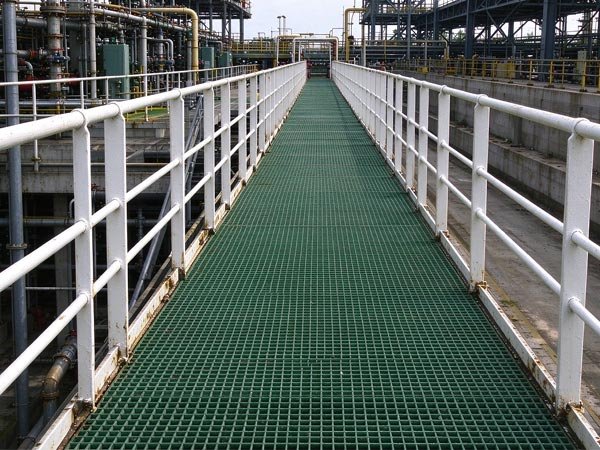
What Information Should Be Provided When Purchasing FRP Pultruded Grating?
Preparing complete project information before requesting a quotation from suppliers helps ensure a more accurate assessment of product specifications and reduces repeated communication caused by unclear technical requirements.
The following information should be prepared as a priority.
|
Procurement Information |
Required Specifications |
|
Usage Scenarios |
Intended use (e.g., industrial walkways, equipment maintenance platforms, wastewater treatment facilities, etc.) |
|
Operating Environment |
Environment (indoor/outdoor, humidity levels, chemical exposure, temperature range, and UV exposure) |
|
Load Requirements |
Loading requirements (personnel/live loads, concentrated loads, wheel loads, and relevant dynamic operating conditions) |
|
Support Conditions |
Support span, support spacing, orientation of load-bearing bars, and details of the supporting structure |
|
Load-bearing Bar Specifications |
Cross-sectional profile, height, spacing of load-bearing bars, and other relevant structural parameters |
|
Grating Structure |
Spacing of transverse connecting bars (cross-rods), open-area percentage, and other structural requirements |
|
Surface Requirements |
Surface finish (e.g., anti-slip gritted surface or other available options) |
|
Panel Dimensions |
Dimensions (length, width), quantity, and site layout |
|
Fabrication Requirements |
Fabrication details (cutouts, notches, edge treatments, removable panels, etc.) |
|
Technical Documentation |
Layout drawings, technical specifications, applicable standards, and required test reports |
If the specific grating model has not yet been determined, you can provide the walkway layout drawings, application scenario, loading conditions, and support spacing first. The supplier can then help identify any additional technical information required.
For projects with high load-bearing requirements, complex chemical environments, or specific regulatory requirements, further verification of the product’s technical documentation is necessary, and the final solution should be confirmed by the engineers responsible for the project design.
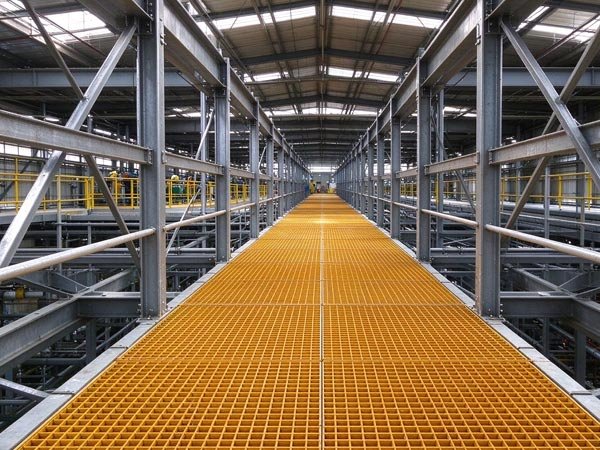
Conclusion
Selecting the right Fiberglass grating requires a comprehensive assessment of the application, load-bearing bar structure, support span, load requirements, surface finish, and installation conditions, rather than relying solely on panel thickness or overall dimensions.
The main load-bearing bars of frp grate have a defined load-bearing direction. Therefore, determining the bar cross-sectional shape and spacing, correctly orienting the support span, and verifying allowable loads and deflection against the load tables for the specific product are essential steps in selecting grating for industrial walkways.
For industrial walkways, equipment maintenance platforms, and other industrial access areas, it is recommended to define the actual operating conditions and design loads before determining grating specifications based on the product’s technical documentation. For custom panels or cutouts, support locations and structural requirements should also be confirmed in advance.
With appropriate product selection and proper installation, fibreglass reinforced plastic grating can deliver its advantages in corrosion resistance, lightweight construction, and industrial walkway applications.
FAQ
References & Sources
1.FRP Composites Grating Manual – American Composites Manufacturers Association (ACMA)
2.Standard Specification for FRP Gratings (ASTM F3059) – ASTM International
3.General Requirements for Walking-Working Surfaces – Occupational Safety and Health Administration (OSHA)
SIMILAR PRODUCTS
Custom Anti-Corrosion FRP Pultruded Round Tube Supplier
Custom Anti-Corrosion FRP Pultruded Round Tube Supplier Custom Anti-Corrosion FRP Pultruded Round Tube Supplier High-strength FRP pultruded round tube: lightweight,…High Strength FRP Pultruded Square Tube Manufacturer
High Strength FRP Pultruded Square Tube Manufacturer High Strength FRP Pultruded Square Tube Manufacturer FRP Square Tube – a lightweight,…