

Many engineering contractors and equipment manufacturers looking for corrosion-resistant non-metallic structural solutions first consider FRP pultruded profiles. During the material selection process, many customers often confuse hand lay-up fiberglass products with pultruded FRP profiles, assuming they have the same performance. This can lead to improper material selection, resulting in insufficient structural load capacity, deformation and cracking, corrosion protection failure, and shorter-than-expected service life.
To help customers select the right materials and avoid procurement issues, this article provides a comprehensive overview of FRP pultruded profiles from multiple perspectives, supporting material selection requirements across various applications such as chemical, power, and renewable energy industries.
What Are FRP Profiles?
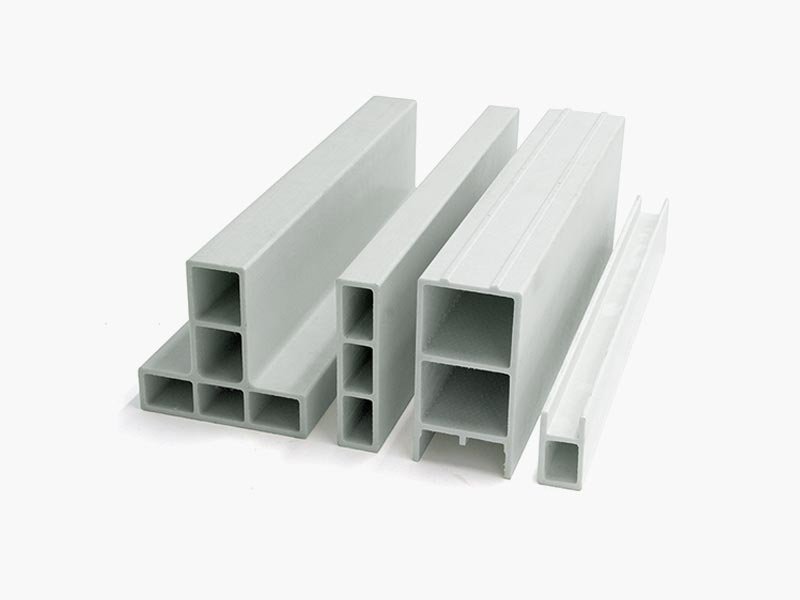
FRP stands for Fiber Reinforced Plastic. FRP pultrusion profile refer to pultruded fiberglass profiles, which are high-performance standardized FRP structural profiles.
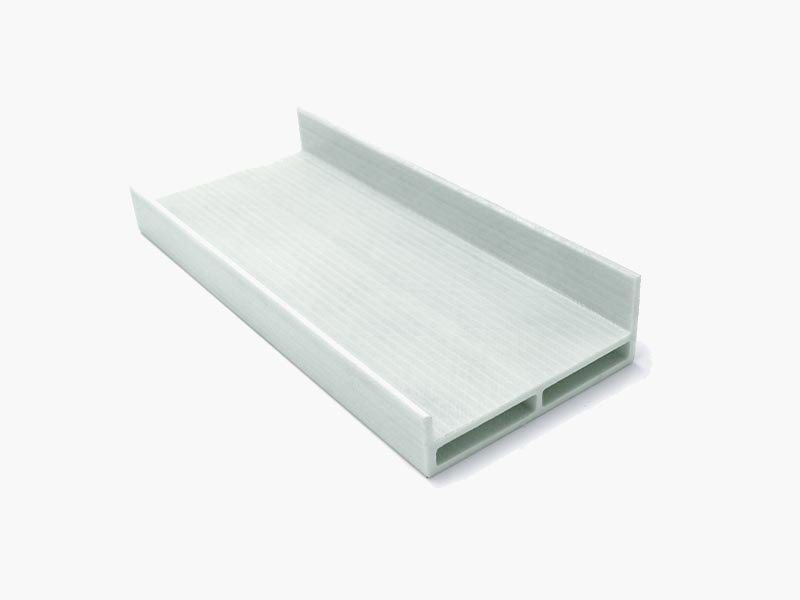
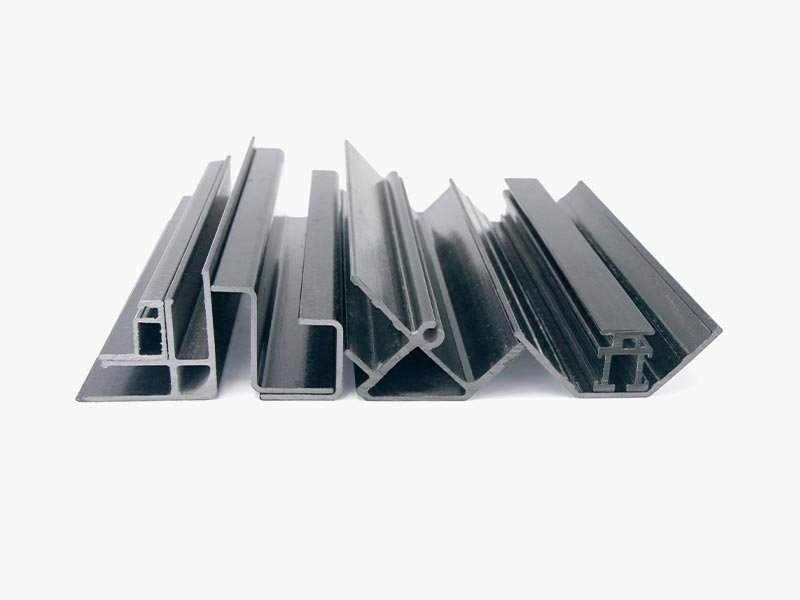
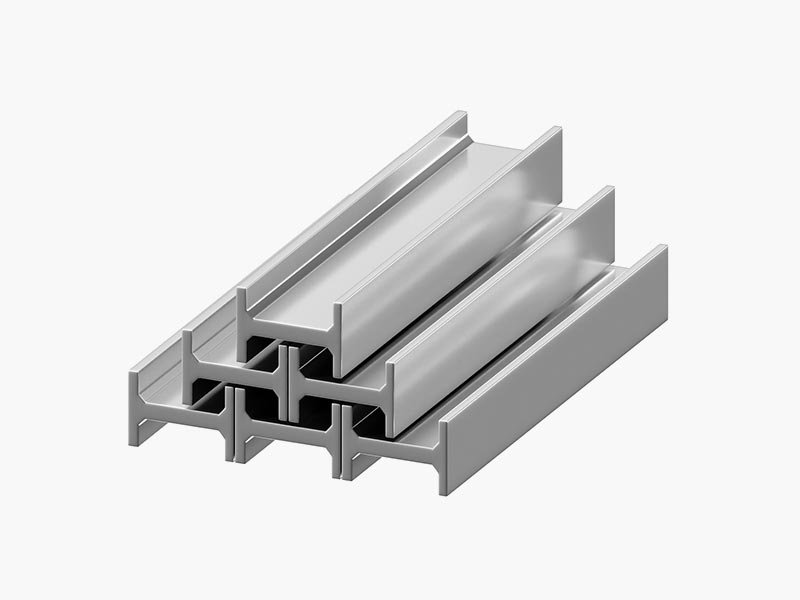
These products use continuous glass fibers and resin matrix as raw materials and are manufactured through the pultrusion process with continuous curing. They can be produced in various custom cross-sectional profiles, enabling the mass production of standardized structural components, including square tubes, round tubes, angles, channels, I-beams, flat bars, ladder rungs, and grating frames.
Differences Between FRP pultruded profiles and Traditional Metal Structures
Compared with traditional metal structures, FRP pultruded profiles offer irreplaceable advantages in corrosion resistance, electrical insulation, lightweight design, and maintenance-free performance. They effectively solve the challenges faced by metal structures in corrosive environments and special electrical applications.
|
Comparison Item |
FRP pultruded profiles |
Steel / Aluminum Alloy Frames |
|
Corrosion Resistance |
Resistant to acids, alkalis, salt spray, and chemical media; does not rust and requires no regular anti-corrosion coating maintenance |
Prone to corrosion in marine, chemical, and wastewater environments; requires regular anti-corrosion treatment, resulting in higher maintenance costs |
|
Electrical Insulation Performance |
Naturally non-conductive material with excellent electrical insulation properties |
Metal is conductive and requires additional insulation protection in electrical applications |
|
Weight |
Lightweight design with a density approximately 1/4 of steel; easier and safer for transportation and installation |
Heavy structure; large-span and heavy-duty frames require more installation equipment and higher labor costs |
|
Thermal Conductivity |
Excellent thermal insulation performance; reduces condensation in cold environments and prevents corrosion caused by moisture buildup |
High thermal conductivity; greater temperature differences may cause condensation, accelerating corrosion and aging |
|
Mechanical Performance |
High longitudinal strength, excellent fatigue resistance, and stable load-bearing performance; limited transverse load capacity |
More balanced multi-directional mechanical properties; suitable for heavy loads and complex stress conditions |
|
Maintenance Requirements |
Nearly maintenance-free; no need for repainting, coating repair, or corrosion treatment |
Requires regular surface treatment, coating maintenance, and corrosion protection; higher lifecycle maintenance costs |
Key Differences: Hand Lay-Up Fiberglass vs. Pultruded FRP Profiles
Many engineers and purchasing professionals consider hand lay-up fiberglass products and pultruded FRP profiles as the same type of fiberglass material and assume they can be used interchangeably. However, due to differences in manufacturing processes, these two products have significant differences in fiber alignment, structural density, and load-bearing capacity. The following section provides a direct comparison of their differences.
|
Comparison Item |
Hand Lay-Up Fiberglass |
Pultruded FRP Profiles |
|---|---|---|
|
Manufacturing Process |
Manual hand lay-up production with high process variability; product quality depends heavily on operator skills |
Automated continuous pultrusion process with standardized molds, ensuring stable and consistent production quality |
|
Fiber Content |
Lower glass fiber content (30%–50%); random fiber orientation, insufficient load-bearing structure, lower overall density |
Higher glass fiber content (55%–70%); continuous and directional fiber alignment, providing excellent structural reinforcement |
|
Mechanical Performance |
Lower overall strength; prone to deformation under load, delamination, cracking, and fatigue failure |
High longitudinal strength, excellent stiffness, stable load-bearing performance, and strong resistance to deformation and fatigue |
|
Dimensional Accuracy |
Large manual variations in dimensions and wall thickness; limited standardization and consistency |
High dimensional accuracy with standardized molds; precise cross-sections, suitable for assembly and structural applications |
|
Stability & Service Life |
Internal delamination may occur; poor weather resistance and aging resistance; shorter service life |
Uniform material structure, excellent corrosion resistance and aging resistance; long-term stable performance |
|
Typical Applications |
Suitable for non-structural components, small-batch products, and decorative applications |
Widely used for engineering structures such as cable trays, handrails, platforms, supports, and long-term structural applications |
|
Cost Characteristics |
Suitable for small-batch customized production; higher cost for large quantities; inconsistent product quality |
Suitable for standardized mass production; lower overall engineering costs and better cost efficiency |
Key Selection Conclusion
For engineering support structures requiring load-bearing capacity, long-term mechanical stress resistance, outdoor corrosion resistance, and precision assembly, hand lay-up fiberglass products should not be used as a substitute for pultruded FRP profiles. Otherwise, insufficient load capacity and premature failure may occur.
Based on the above comparison, FRP pultruded profiles manufactured through automated pultrusion processes offer stable mechanical properties, precise dimensions, and reliable quality, effectively avoiding common issues of hand lay-up fiberglass products, such as low strength, cracking, and inconsistent quality.
Compared with traditional metal structures such as steel and aluminum alloys, pultruded profiles provide advantages including corrosion resistance, electrical insulation, lightweight design, thermal insulation, and maintenance-free performance. They effectively solve common challenges of metal components in chemical corrosion, electrical insulation, coastal salt spray, and outdoor temperature variation environments, including rusting, high maintenance requirements, and potential safety risks.
With these performance advantages, FRP pultruded profiles can meet the requirements of various complex and harsh operating conditions. They are suitable for engineering support structures requiring long-term load-bearing performance, corrosion resistance, and electrical insulation, making them an ideal material choice for industrial non-metallic structural applications.
Applications and Operating Conditions of FRP Pultruded Profiles
FRP pultruded profiles feature lightweight design, excellent electrical insulation, and minimal maintenance requirements after installation. With outstanding resistance to acids, alkalis, and salt spray corrosion, they effectively eliminate rust issues compared with carbon steel and traditional steel structures, significantly reducing corrosion protection and maintenance costs. They are ideal for corrosive environments and electrical insulation applications.
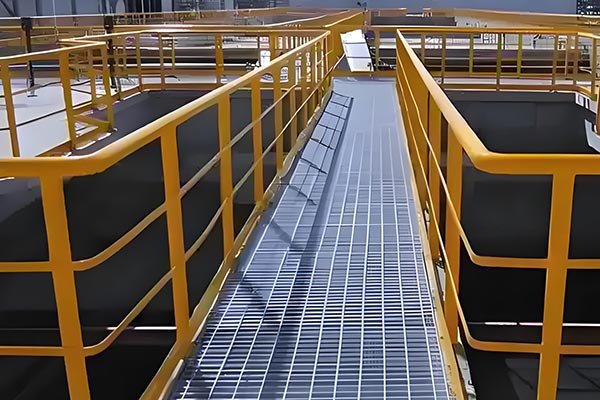
Chemical, Wastewater, and Electroplating
Suitable for long-term exposure to acidic and alkaline wastewater. They can be used for equipment supports, platforms, and walkway guardrails, eliminating repeated painting.
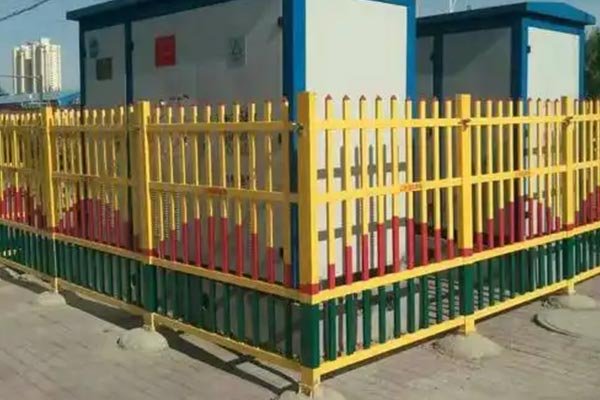
Power and Rail Transit Applications
With stable electrical insulation performance, FRP Profiles are widely used for cable supports, substation components, insulation ladders, and protective frames, reducing electrical leakage risks.

Coastal and Marine Environments
Resistant to high salt spray and high humidity corrosion, FRP profiles are suitable for marine applications such as dock guardrails and support structures for seawater treatment equipment.
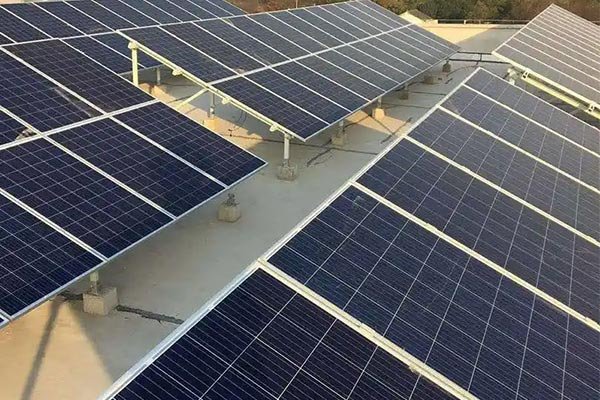
Renewable Energy Industry
Suitable for outdoor use, resistant to sunlight, rain and temperature cycling. Widely used in solar PV, wind power, energy‑storage frames and corrosion‑resistant industrial structures.
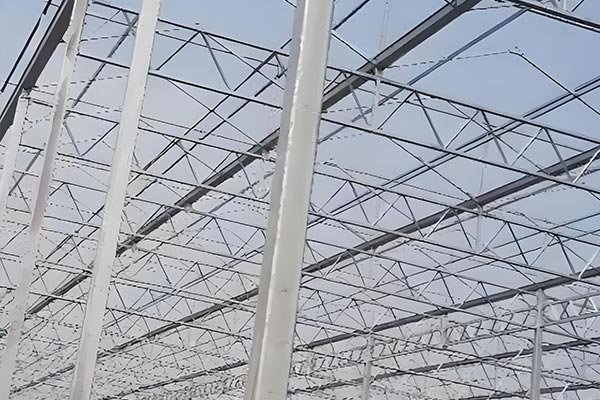
Construction and Municipal Projects
Used for outdoor corrosion-resistant railings, skylight support frames, and landscape protection structures, offering long service life and reduced maintenance requirements.
Key Selection Factors for FRP Pultruded Profiles
When selecting FRP pultruded profiles, it is important to consider the actual operating environment, load requirements, and project specifications. The following six key factors should be evaluated:
01——
Corrosive Environment
General applications: polyester resin profiles; Long-term exposure to strong acids, alkalis, or marine salt spray: vinyl ester resin systems recommended; High-temperature or high insulation requirements: epoxy resin systems preferred.
02——
Load-Bearing Requirements
Select the appropriate profile cross-section and wall thickness based on actual load requirements, support span, and wind load conditions to prevent insufficient sizing and long-term bending deformation under continuous stress.
03——
Electrical Insulation Requirements
For substations, power transmission lines, and energized work areas, dedicated electrical insulation FRP pultruded profiles should be selected. All performance indicators must comply with relevant electrical safety standards.
04——
Dimensional Tolerance Requirements
For precision equipment assembly applications, confirm the manufacturer’s profile production tolerances in advance to ensure proper fit and assembly accuracy during installation.
05——
Installation Method
Determine the installation method in advance, including bolted connections, drilling, adhesive bonding, or embedded fastening. Select suitable FRP profiles according to the installation process.
06——
Fire Retardant Requirements
For projects with fire safety inspection requirements, flame-retardant Pultruded fiberglass profiles can be customized to meet specified fire-retardant ratings.
Conclusion
FRP pultruded profiles are high-performance non-metallic structural materials. Relying on mature pultrusion manufacturing technology, they provide stable mechanical properties, excellent corrosion resistance, and electrical insulation performance. They effectively solve common engineering challenges of hand lay-up fiberglass products, such as poor load-bearing capacity and low stability, as well as traditional metal structures, including corrosion, high maintenance costs, and electrical conductivity risks.
In actual material selection, accurate profile selection based on operating conditions, combined with suitable resin systems and profile specifications, can effectively prevent issues such as structural deformation, corrosion protection failure, and reduced service life. FRP pultruded profiles significantly reduce overall lifecycle maintenance costs and are a high-performance structural material combining cost-effectiveness and practicality for corrosive, electrical insulation, and outdoor applications.