

The FRP Pultrusion Machine is the core equipment for mass production of FRP profiles, directly affecting profile dimensional accuracy, mechanical properties, surface quality, and production stability. Due to insufficient knowledge of equipment selection, many profile manufacturers choose unsuitable machines, resulting in low product qualification rates, high production costs, and frequent equipment failures.
Based on years of practical experience in pultrusion equipment, moulds, and FRP profile production, this article summarizes the key selection factors for FRP pultrusion machines, helping manufacturers quickly select suitable, durable, and cost-effective pultrusion equipment.
This article covers five key aspects, including equipment selection, working principles, machine classifications, selection criteria, and common troubleshooting solutions, providing practical selection guidance for small, medium, and large FRP manufacturers.
Key Factors for FRP Pultrusion Machine Selection
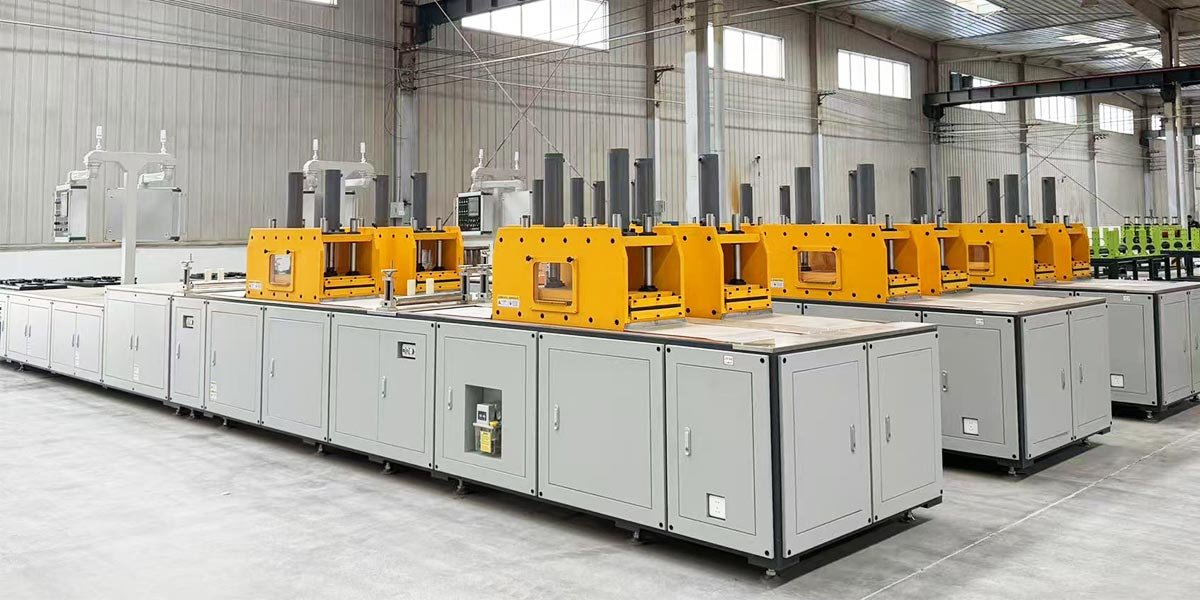
The key to FRP Pultrusion Machine selection is to match the pulling system, temperature control system, power parameters, and compatible tooling according to profile cross-section, wall thickness, production capacity requirements, and mechanical performance requirements. This ensures stable, high-precision, and low-waste continuous production while avoiding improper machine selection, including oversized machines for small applications or undersized machines for high-demand production.
Core Technology and Working Principle
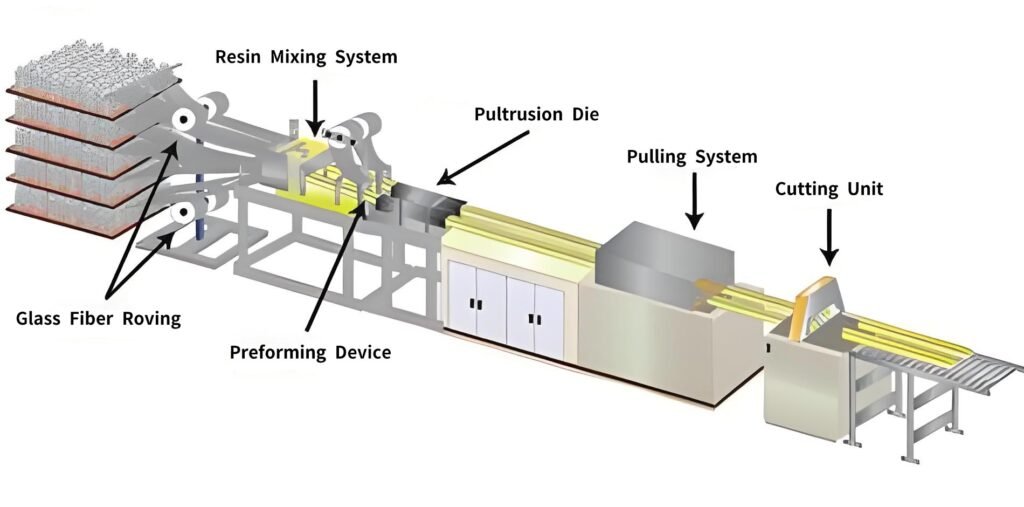
FRP pultrusion is a mainstream manufacturing process for efficient continuous production of FRP profiles. With advantages of high stability and excellent product consistency, it is widely used in the composite industry. The core process of the FRP Pultrusion Machine includes material arrangement → resin impregnation → high-temperature curing → pulling and shaping → fixed-length cutting. The entire process operates through an automated closed-loop system, enabling 24-hour continuous production.
The equipment operates based on four core technologies: constant-tension pulling, segmented temperature-controlled curing, precise resin impregnation, and CNC synchronous control. Reinforcement materials such as fiberglass rovings and mats are arranged through the creel system, fully impregnated with resin, and then fed into the dedicated pultrusion die. After segmented temperature-controlled curing and forming, the profiles are continuously pulled at a uniform speed by the pulling system and automatically cut to complete finished product production.
Key advantages of high-quality FRP Pultrusion Machines: temperature control accuracy of ±1℃, uniform curing without delamination; constant-tension pulling without deformation; CNC control system precisely matching production speed and supporting the production of various FRP profile specifications.
Types of FRP Pultrusion Machines
The mainstream pultrusion machines in the industry are mainly divided into hydraulic and crawler-type models. Due to significant differences in structure, performance, and application scenarios, the selection of the right machine type is a key factor. Manufacturers can choose the suitable model according to their primary FRP profile products.
Hydraulic FRP Pultrusion Machine
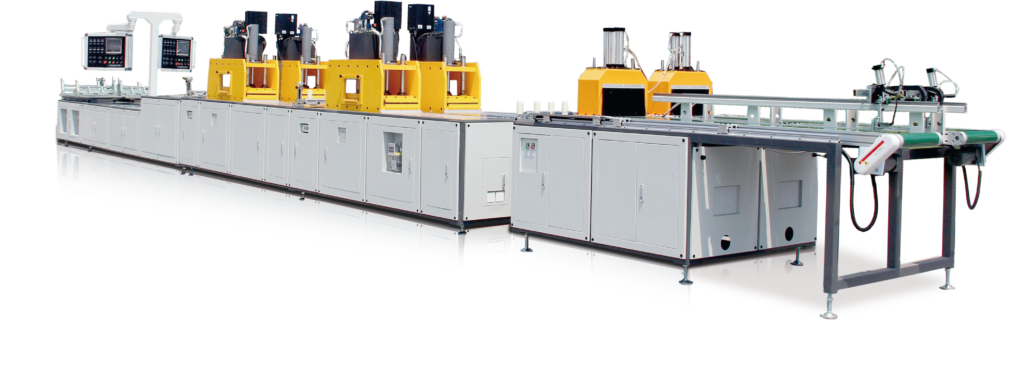
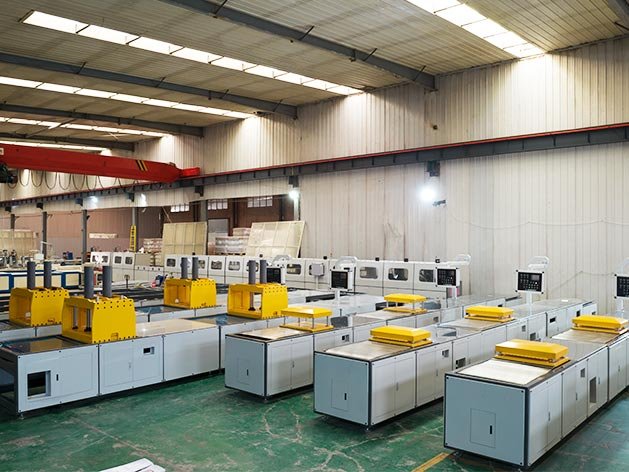
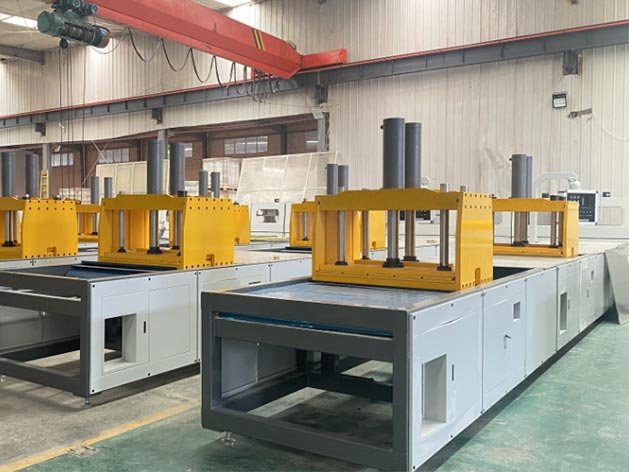
Hydraulic FRP Pultrusion Machines use hydraulic cylinders as the pulling power source and adopt a reciprocating pulling structure. They are traditional machines featuring mature technology and high operational stability.
Key Advantages:
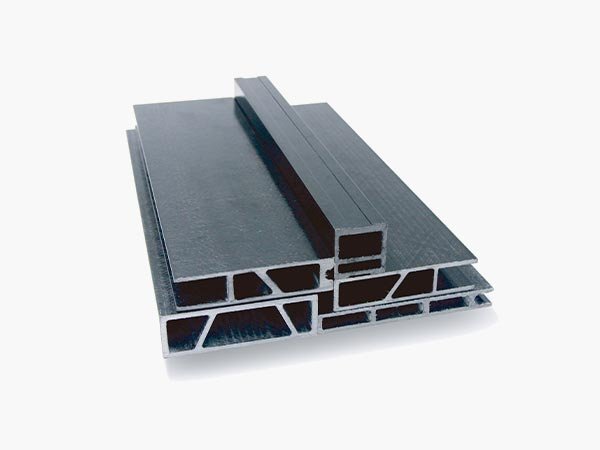
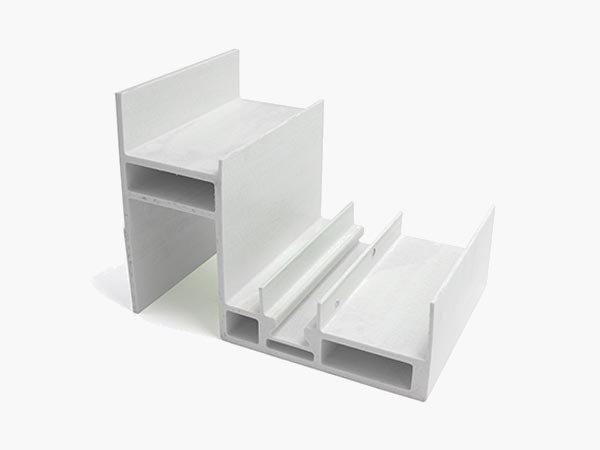
High pulling force, stable power output, simple structure, low failure rate, cost-effective investment, convenient maintenance, and widely available spare parts. They are suitable for large cross-section, thick-wall, and high-strength heavy-duty FRP profiles, such as electrical insulation profiles, FRP I-beams, channels, and large square tubes.
Limitations:
The reciprocating pulling operation cannot achieve fully continuous production, resulting in relatively lower production speed. During high-speed production, thin-wall profiles may experience dimensional fluctuations, making it unsuitable for high-precision thin-wall profile mass production.
Crawler-Type FRP Pultrusion Machine
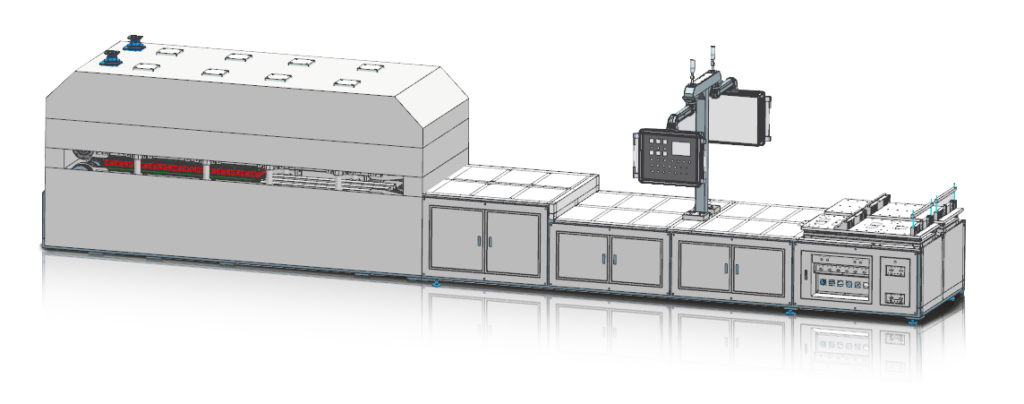
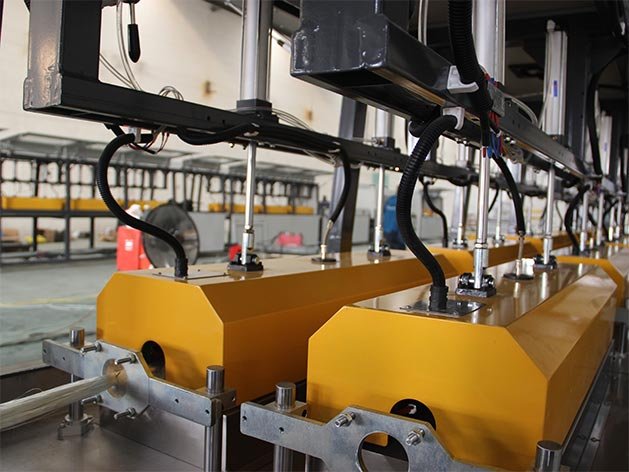
Crawler-type pultrusion machines adopt an upper and lower crawler clamping continuous pulling structure with variable-frequency synchronous drive, enabling uninterrupted operation throughout the production process. They are the mainstream models for modern high-precision and high-efficiency FRP profile production.
Key Advantages:
Continuous and uninterrupted pulling improves production efficiency by 1.5–3 times compared with hydraulic models. With uniform tension and stable operation, they provide excellent profile straightness, dimensional accuracy, and surface flatness. They are suitable for thin-wall, customized, and high-precision FRP profiles, such as precision insulation components, gratings, and special-shaped profiles.
Limitations:
The equipment features higher precision and investment costs, requiring higher standards for installation, commissioning, and daily maintenance. Crawler components require regular maintenance, and the pulling force is limited for oversized heavy-duty FRP profiles.
Key Selection Criteria for FRP Pultrusion Machines
When selecting equipment, do not focus solely on price. A comprehensive evaluation should consider profile specifications, production capacity, and quality requirements. The following are industry-standard key selection criteria suitable for most fiberglass manufacturing companies.
1. Select Based on Profile Specifications
2. Select Based on Production Capacity Requirements
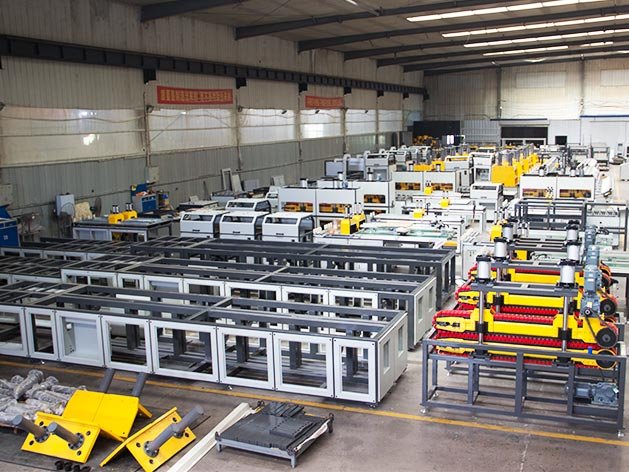
3. Select Based on Core Equipment Configurations
- First, a multi-zone independent intelligent temperature control system to meet the curing requirements of different resin systems.
- Second, a stable pulling system. For hydraulic machines, focus on pressure stability; for caterpillar machines, focus on synchronization control accuracy.
- Third, a reinforced welded machine frame that maintains structural stability and precision during long-term operation.
4. Select Based on Mold Compatibility
5. Select Based on After-Sales Service and Customization Capability
Common Production Issues and One-Stop Solutions for FRP Pultrusion Equipment
Most profile production issues are caused by improper equipment selection, incorrect parameter adjustment, or insufficient maintenance. The following are common industry problems and corresponding solutions, applicable to various types of pultrusion equipment.
1. Rough Surface, Air Bubbles, and Pinholes on FRP Profiles
Causes:
Improper equipment temperature control and pulling speed parameters, insufficient glass fiber impregnation, poor mold venting, and positioning deviation.
Solutions:
Optimize multi-zone temperature control parameters with proper low-speed impregnation and high-temperature curing. Reduce pulling speed appropriately to ensure sufficient resin impregnation. Calibrate mold accuracy, regularly clean venting grooves, and polish the mold cavity.
2. Profile Dimensional Deviation and Bending Deformation
Causes:
Unstable pulling tension, abnormal equipment pressure or synchronization, positioning deviation of the machine frame and mold, and internal stress caused by temperature differences during cooling.
Solutions:
Adjust the pulling pressure stabilization and synchronization system to maintain constant tension production. Regularly calibrate the accuracy of the machine frame and tooling. Optimize the cooling system to achieve uniform cooling and release internal stress.
3. Pulling Slippage and Jamming During Production
Causes:
Insufficient hydraulic pressure, uneven clamping caused by crawler wear, and improper clamping methods for thin-wall profiles.
Solutions:
Adjust hydraulic pressure and replace worn components. Replace worn crawler pads and adjust clamping distance and pressure. For thin-wall profiles, use dedicated clamping tooling to increase contact area and prevent slipping.
4. Incomplete Curing, Internal Porosity, and Delamination of FRP Profiles
Causes:
Insufficient curing temperature, excessive pulling speed, inadequate curing time, and irregular glass fiber arrangement.
Solutions:
Adjust temperature accurately according to the resin system. Match pulling speed with profile thickness to ensure sufficient curing. Calibrate the feeding system and fiber guiding mechanism to maintain uniform glass fiber arrangement.
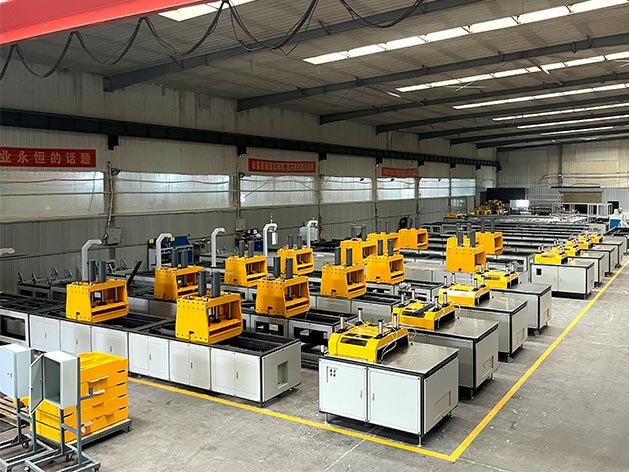
Our GRP pultrusion machine effectively prevent common profile defects such as surface pinholes, air bubbles, roughness, bending deformation, and dimensional deviations. Equipped with professional technical engineers, we provide comprehensive hands-on guidance throughout the entire process, from equipment commissioning to profile production, ensuring smooth operation and worry-free manufacturing.

Conclusion
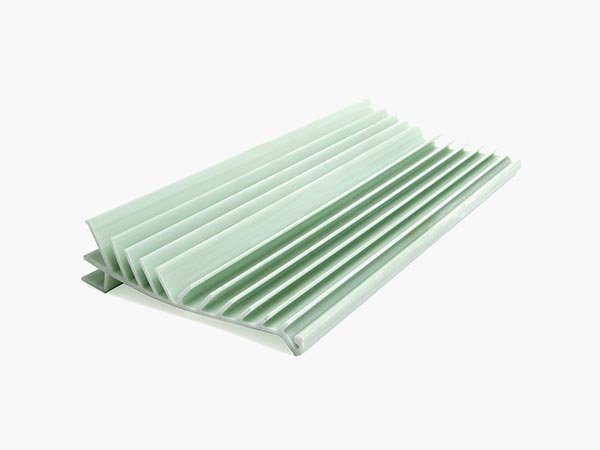
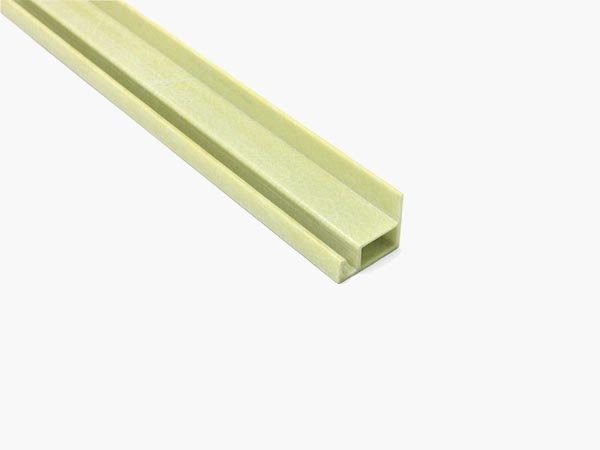
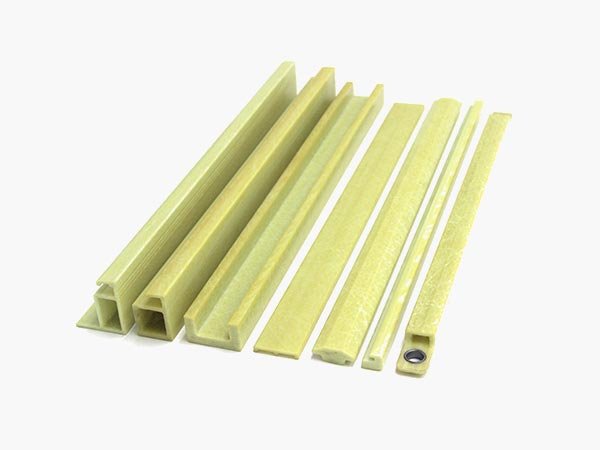
The key to selecting an FRP Pultrusion Machine is proper matching based on production requirements. Hydraulic pultrusion machines are suitable for heavy-duty, large cross-section profiles, offering high cost-effectiveness and stable operation. Crawler-type FRP pultrusion machines are suitable for high-precision and high-speed profile production.
By selecting equipment according to product specifications and production capacity requirements, combined with proper commissioning and maintenance, manufacturers can achieve efficient and high-quality FRP profile production.
We are a direct manufacturer specializing in FRP profiles, pultrusion moulds, and pultrusion equipment, providing one-stop services including equipment customization, mould matching, process commissioning, and lifetime maintenance support to effectively solve equipment selection and production challenges.